This super fun and simple science experiment is a great way to explore how the density of objects determines what floats or sinks. Your kids will love this Floating Orange Experiment!
Find more Fun Water Experiments for kids here!
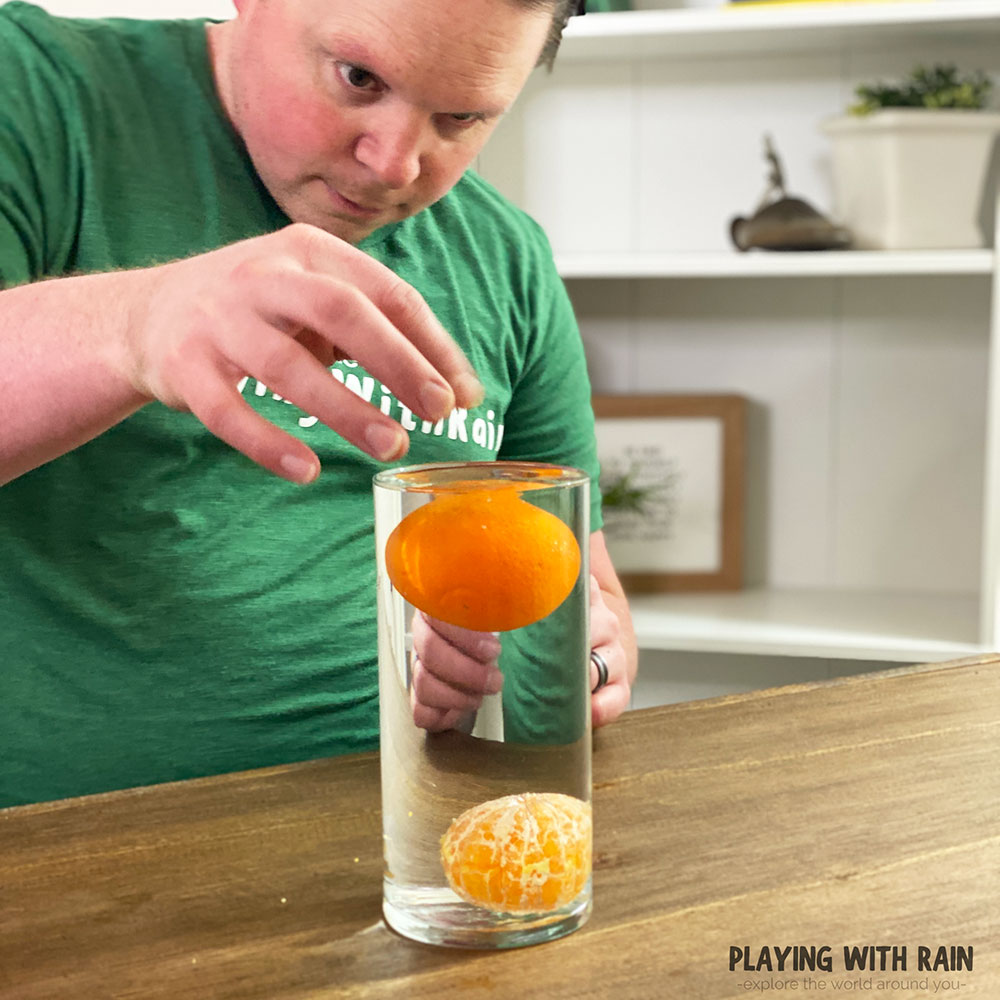
The best thing about this experiment is how simple it is! All you need is a couple of oranges, some water, and a glass and you are ready to explore some fascinating science!
Floating Orange Experiment
This post may contain affiliate links. As an Amazon Associate, I earn from qualifying purchases.
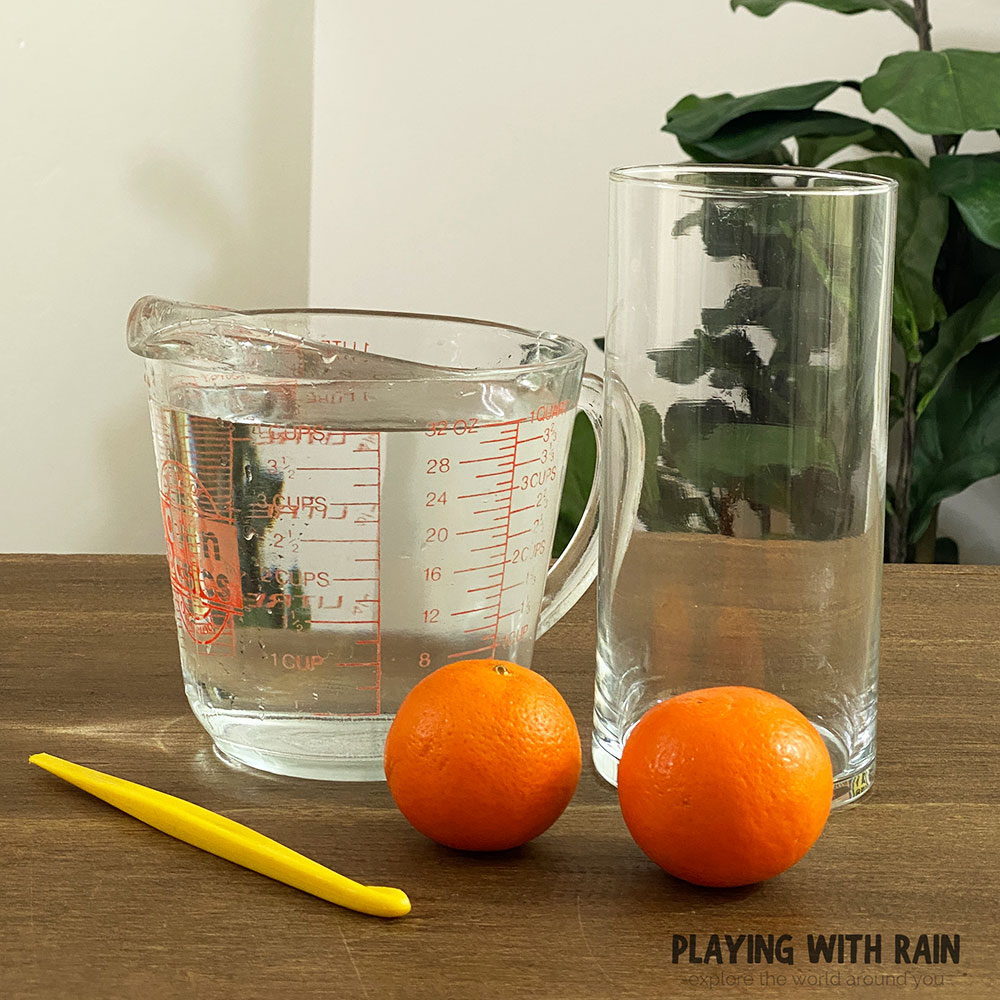
Supplies Needed:
- Tall Glass or Jar
- Water
- 2 Oranges
- Knife or Orange Peeler
Orange Density Experiment
- Fill a tall, clear glass or jar about 3/4 full with water.
- Peel an orange and place it in the water.
- Grab a second orange and place it in the water without peeling it.
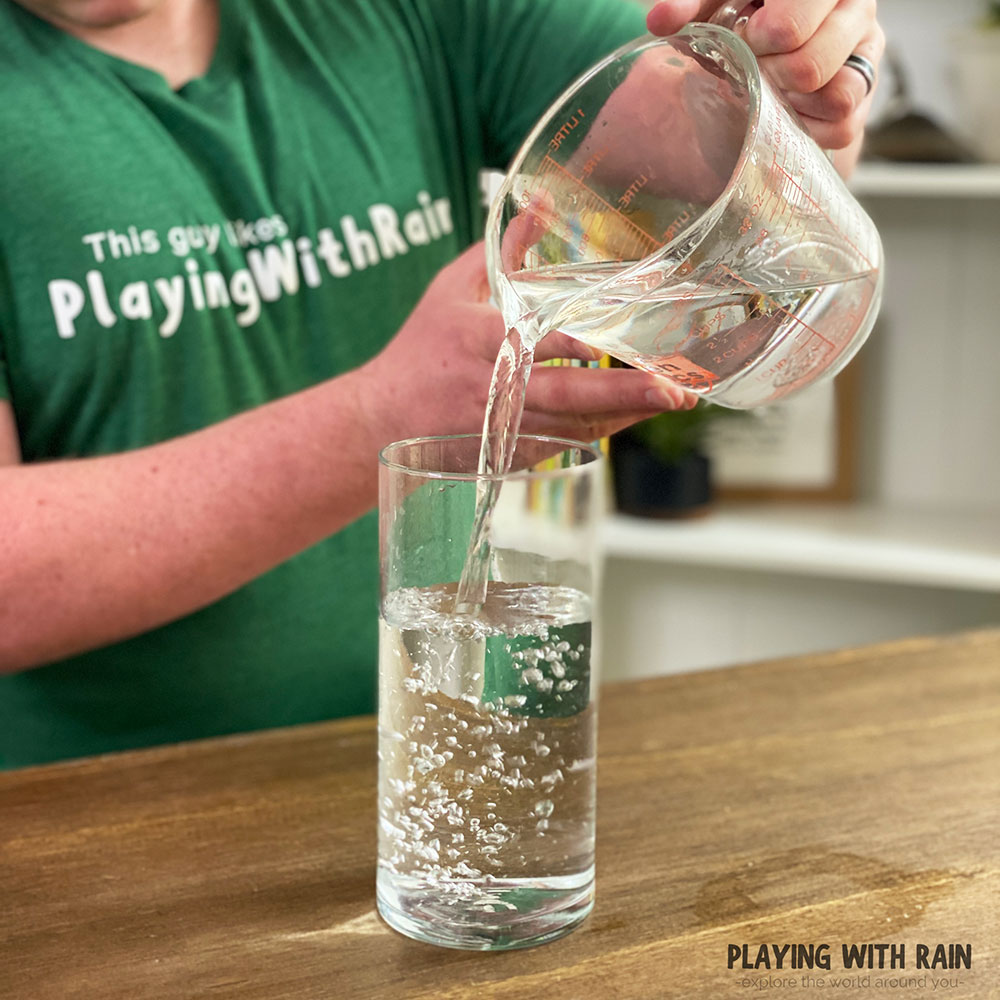
Step 1: Pour Water Into a Tall Glass
This step is super simple, but you do want to make sure not to add too much water to the glass. Since we will be adding oranges into the water, we need to only fill the glass about 3/4 of the way full of water.
The oranges will take up space in the water thanks to a fancy term called displacement.
Not filling the glass all the way to the top with water will give the water and oranges enough space to prevent the water from overflowing and making a mess.
Step 2: Set a Peeled Orange in The Water
Now grab an orange and peel it. I like to use my nifty little orange peeler tool that I included a link to in the materials above, but you can use a knife, your fingers, or whatever you like to peel the orange.
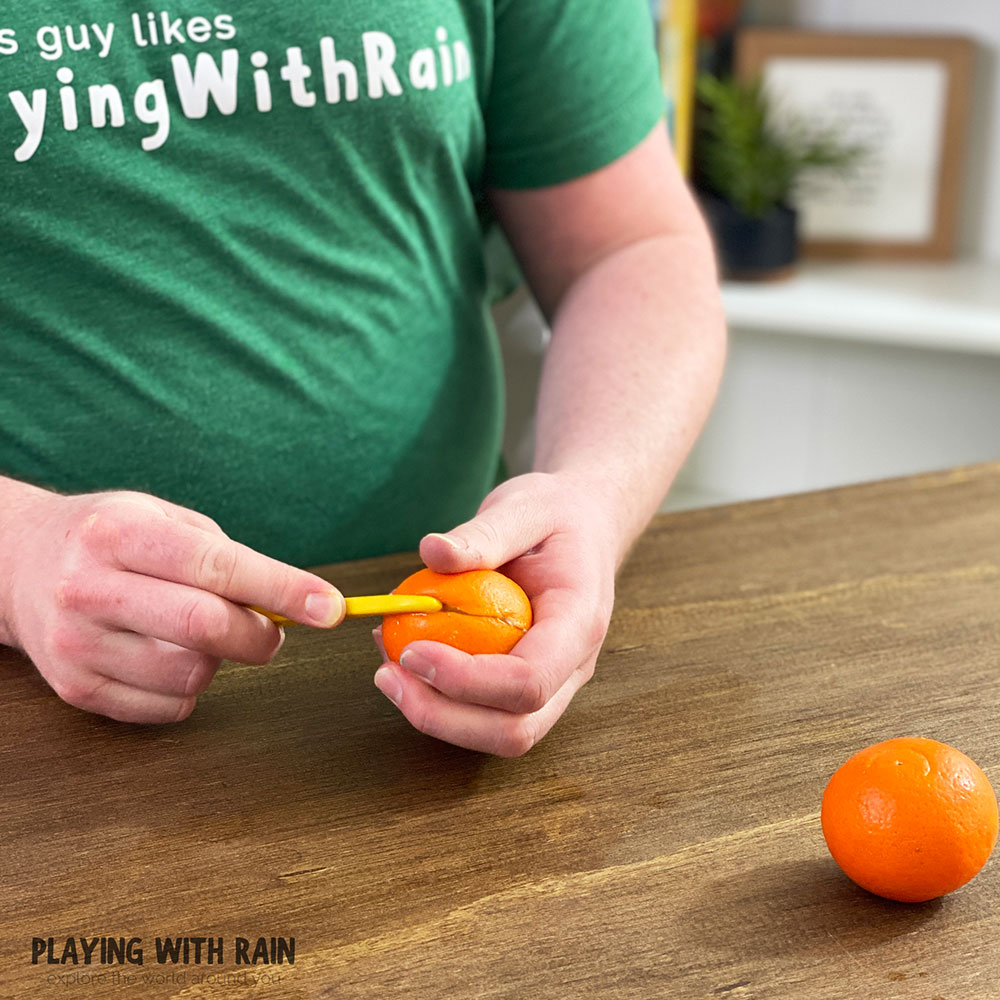
After the orange has been peeled, gently place it in the top of your clear glass to avoid splashing water or tipping the glass over.
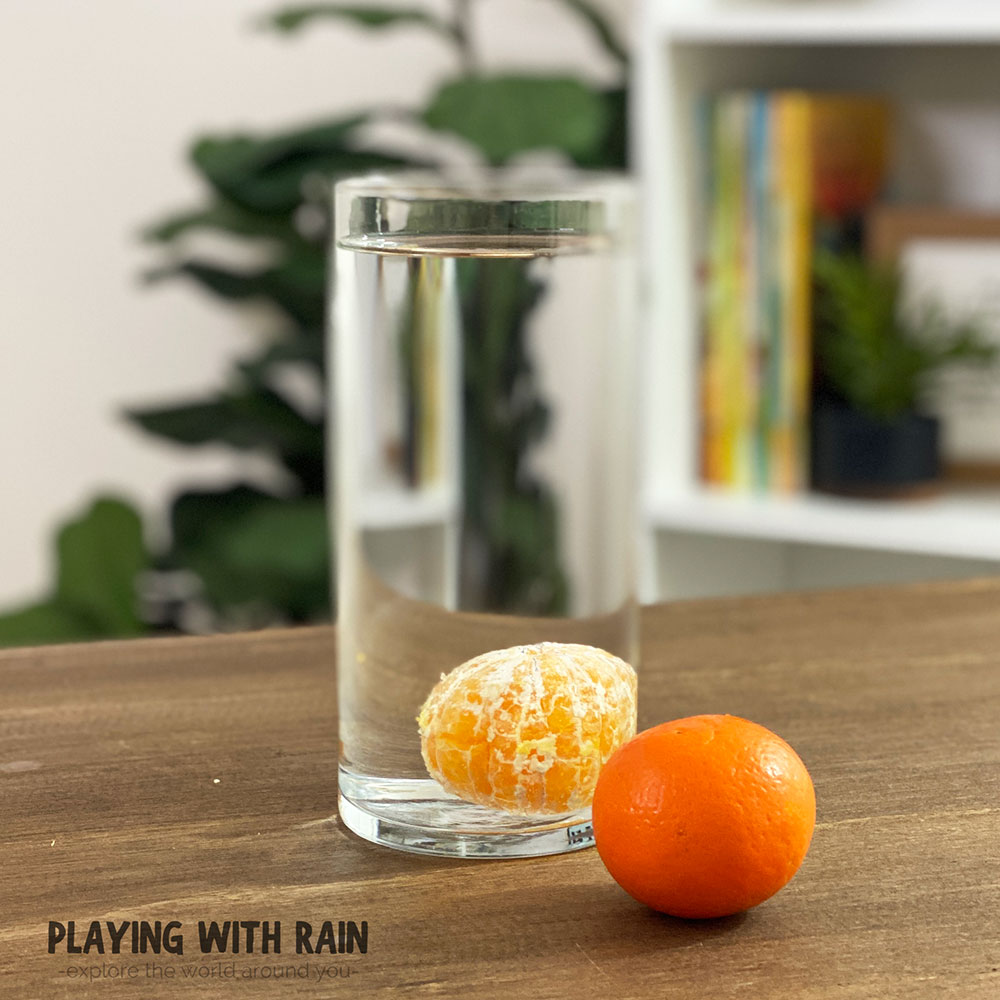
You should notice that the orange will slowly, but steadily sink to the bottom of the glass or jar of water.
Step 3: Place a Second, Unpeeled Orange in the Water
Now grab a second orange to put in the glass, but this time we are not going to peel it. Just place it in the top of the glass with the orange peel on it and see what happens.
What you see will amaze you! The orange that still has a peel on it actually floats to the top of the water, while the peeled orange remains sunk at the bottom of the water!

Variable:
You can also try adding a third orange to the glass, but this time try leaving a little less than half of the orange peel on the orange and peel the rest of the peel from the orange.
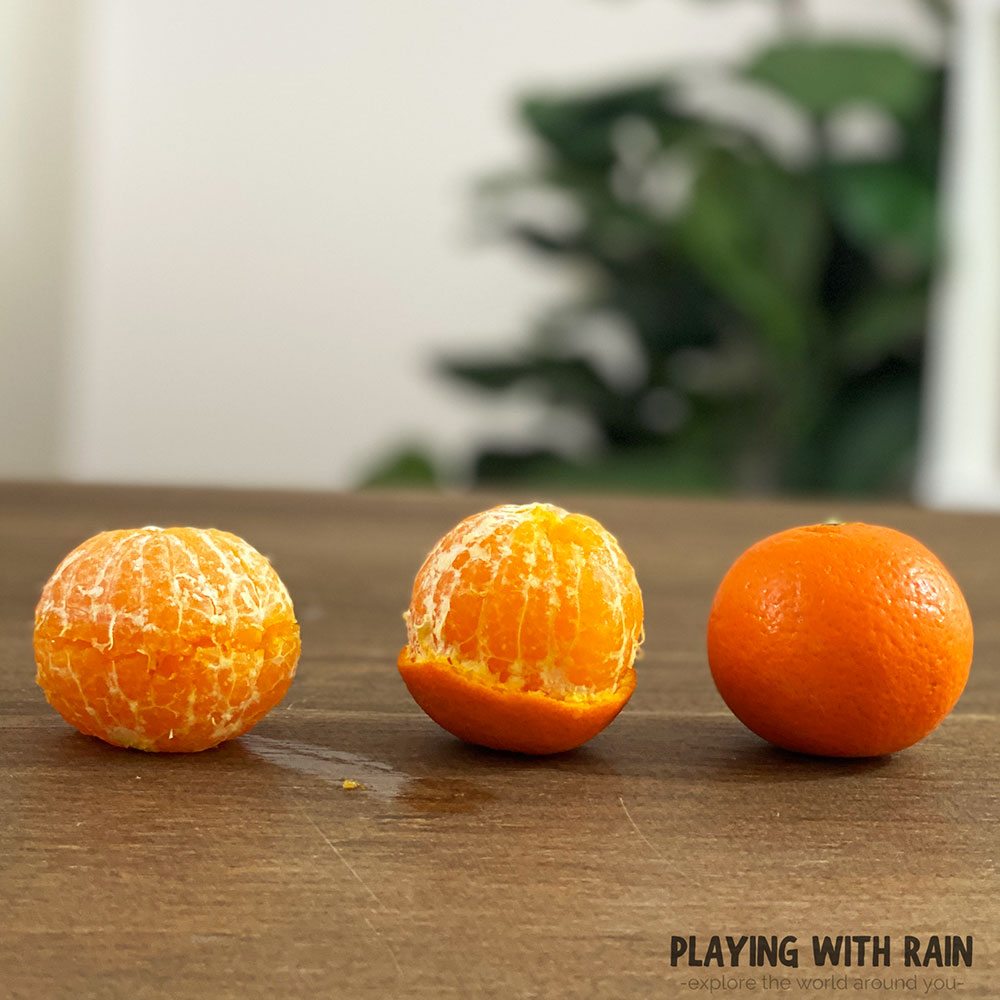
If you get the right ratio of orange peel to orange unpeeled figured out, your half-peeled orange should hover right in the middle of the glass between sinking and floating.
Getting the third orange to neither sink or float might take a little bit of trial and error.
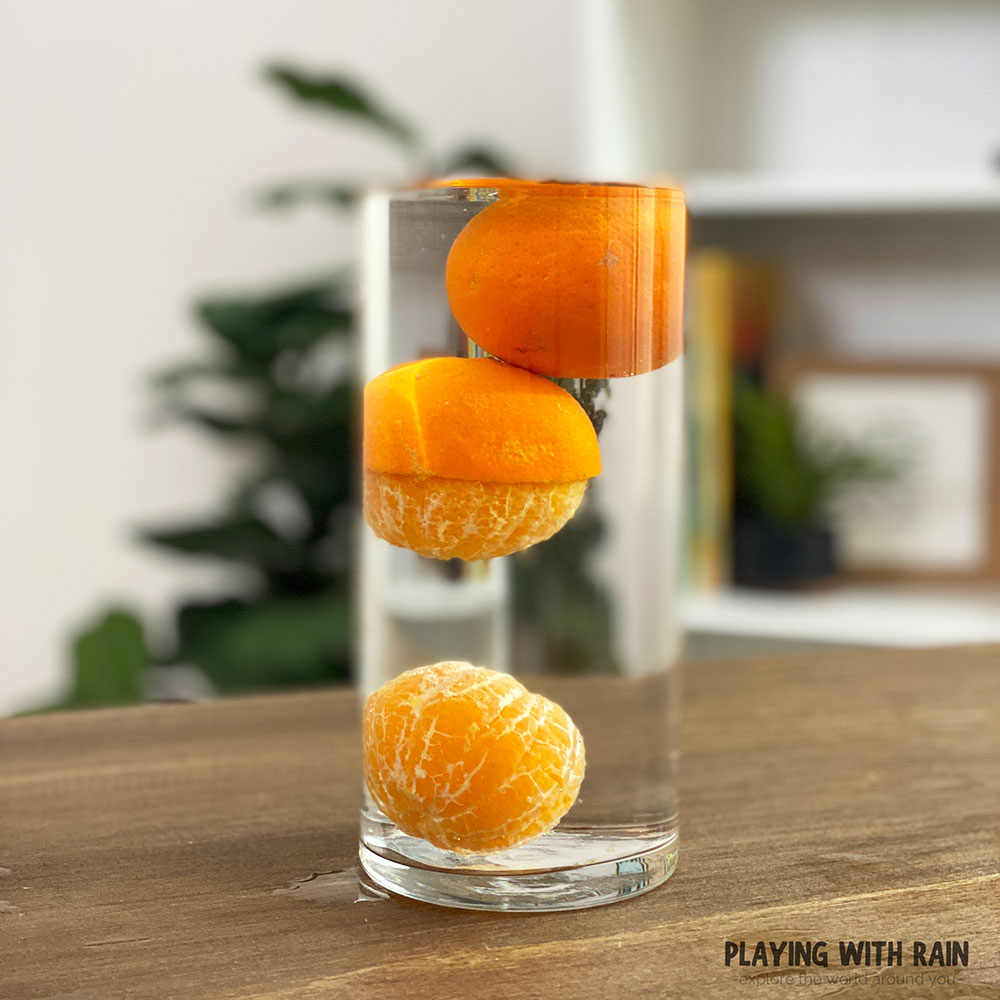
It’s best to take off half the orange peel and keep taking off small amounts after that until you get the right ratio of peel and unpeeled orange to make it hover in the middle of the water column.
Why do Whole Oranges Float, but Peeled Oranges Sink?
The science behind why a whole orange floats and a peeled orange sinks is thanks to the density of the oranges. Density is the mass of an object divided by it’s volume, or in simpler terms, it refers to how compact an object is.
The more compact an object is, the more dense the object is. More dense objects are more likely to sink, and less dense objects are more likely to float.
Instead of changing the density of an object, you can also change the density of the fluid the object is placed in to make the same object float or sink like in this How to Make an Egg Float experiment!
In the case of our floating orange experiment, the orange peel of an orange is very porous (has tiny little holes in it). These tiny holes in the orange peel have lots of little air bubbles trapped inside the orange peel which make the orange rind have a very low density.
So even though the whole orange with a peel on it weighs more and has a greater mass than the peeled orange, the whole orange will float thanks to the low density and air bubbles of the orange peel.
On the other hand, although the orange that has been peeled does weigh less and has less mass, without it’s “floatation device” of the orange peel the peeled orange will sink!
As mentioned in step 3 of this experiment, a fun way to test the floating power of an orange peel is to use a third orange and slowly peel off a little of the orange rind at a time.
You should end up leaving somewhere between 1/2 and 1/4 of the rind on the orange to get a ratio that allows the orange to neither sink nor float, but instead, it will hover in the middle of the water column.
PIN THIS EXPERIMENT FOR LATER

Leave a Reply