A fresh raw egg will typically sink in a glass of fresh water, but we are going to change the density of water and make an egg float with this fun experiment for kids! Let’s go ahead and learn How to Make an Egg Float.
Find more Egg Experiments For Kids here!
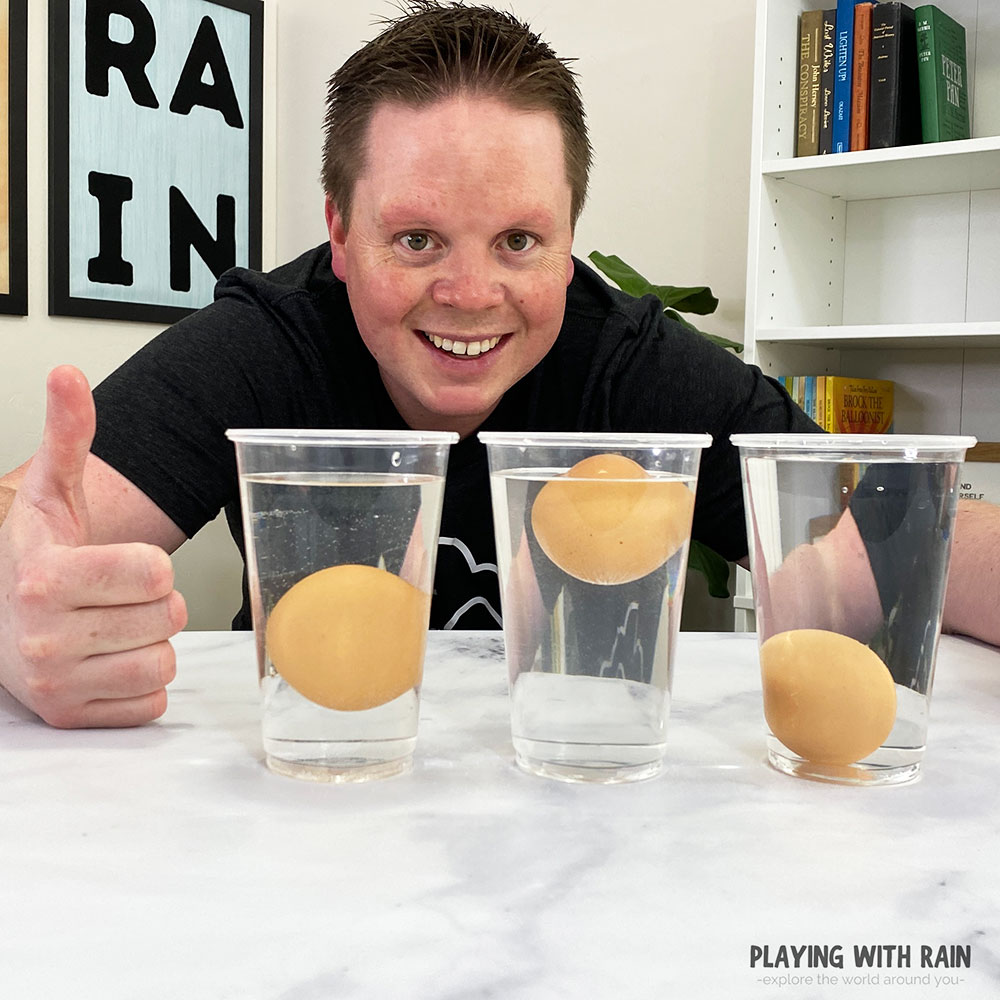
You only need a few simple ingredients for this experiment and it is easy and safe enough to do with your kids at home too!
How to Make an Egg Float
This post may contain affiliate links. As an Amazon Associate, I earn from qualifying purchases.
Supplies Needed:
- 3 Raw Eggs
- 3 Clear Cups
- Water
- Salt
- Spoon
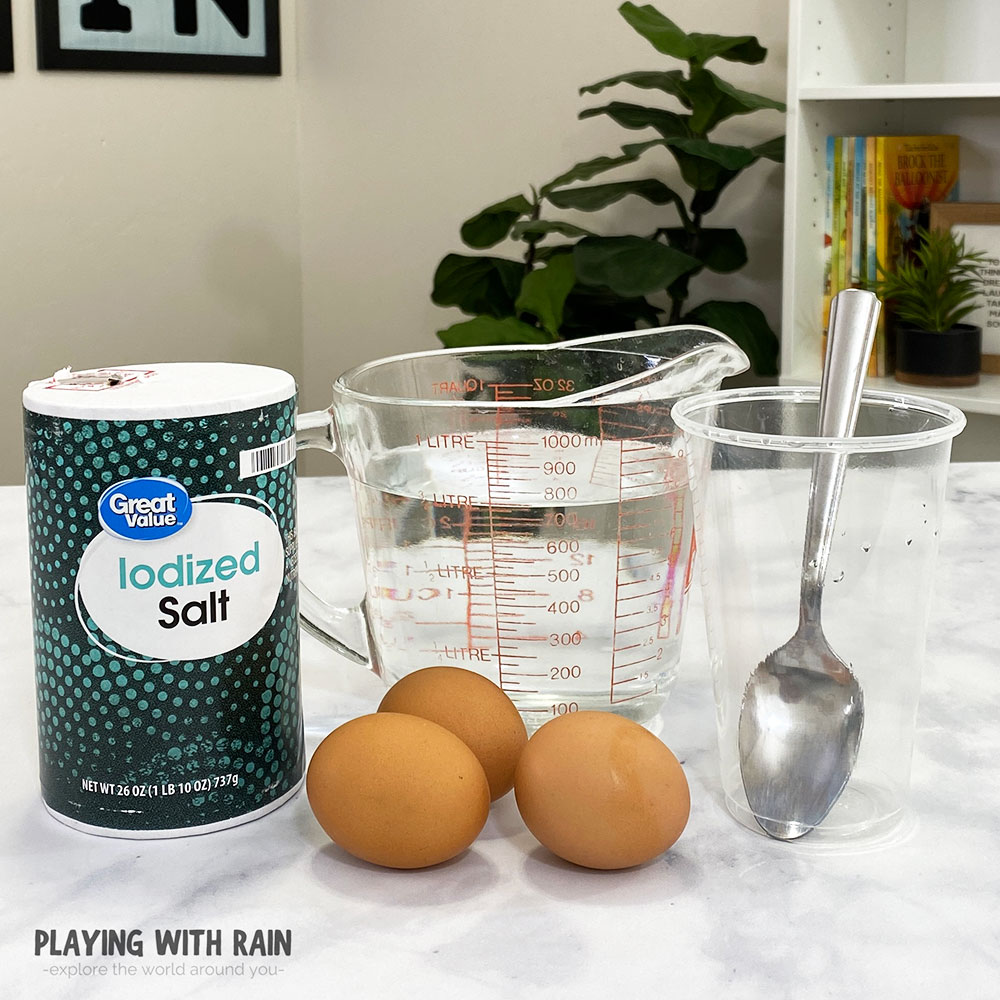
Floating Egg Experiment
- Fill a clear cup about 3/4 full of water.
- Place an egg in the cup and watch it sink.
- Now fill a second cup with a water and salt mixture.
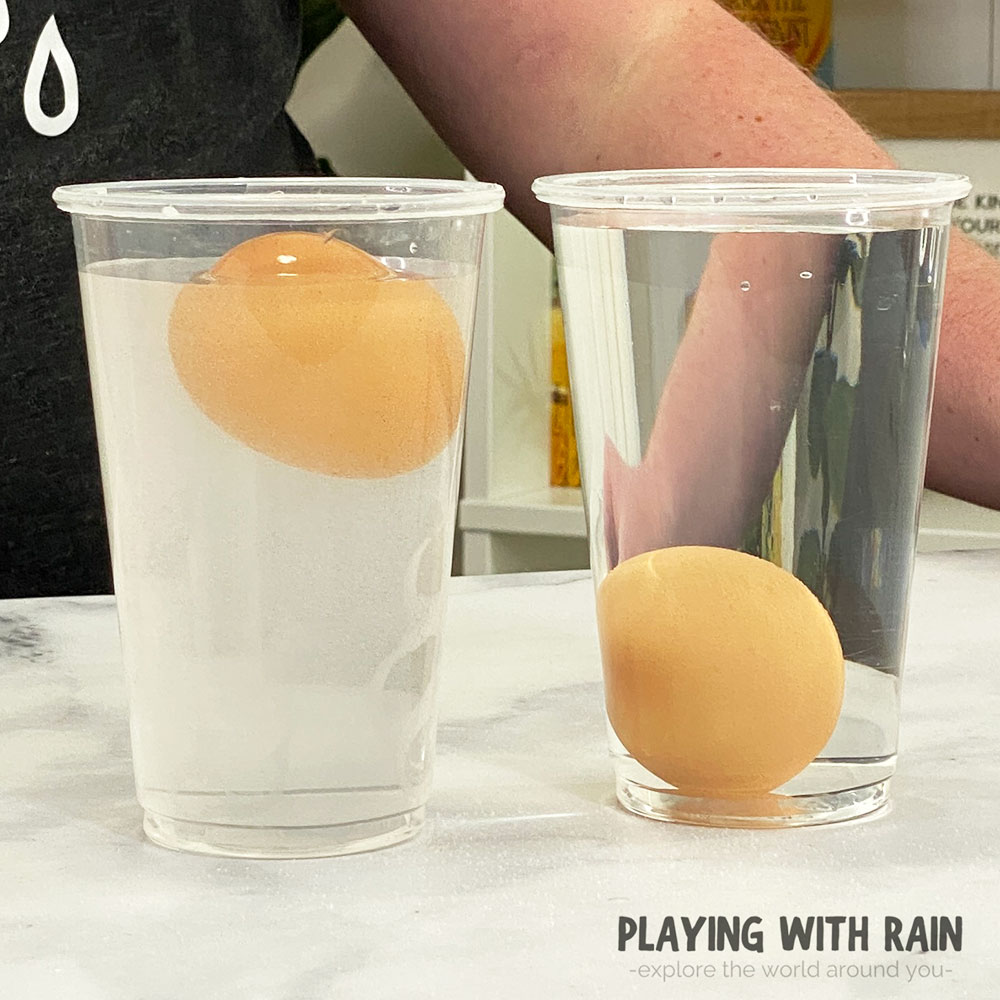
- Place an egg in the saltwater and watch it float.
- Fill a third cup with water again, but mix in less salt than the previous cup.
- Fine-tune how much salt is needed in the water to make the third egg hover between sinking and floating.
Step 1: Pour Water Into a Glass
Let’s get started with this floating egg experiment by filling a clear cup about 3/4 full with water.

Glass or plastic cups work great for this, but just make sure the cup is clear so that you can see what is going on inside!
Step 2: Set an Egg Into The Water
Now gently set an egg into the water-filled cup and pay attention to what the egg does! Do you think it will float to the bottom of the cup or float to the top of the water!?
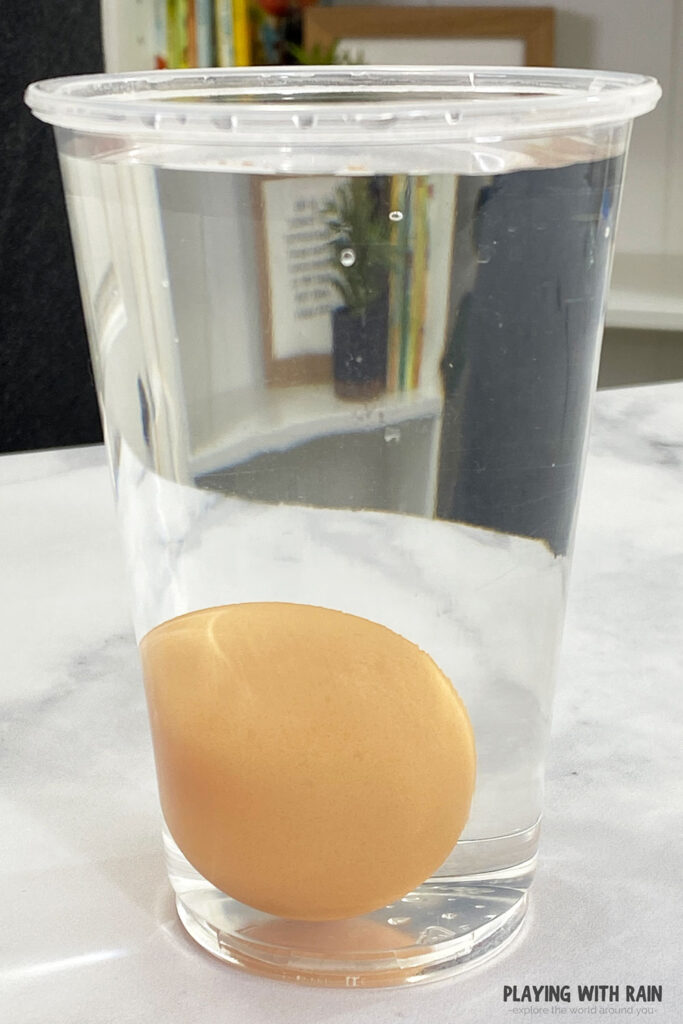
As long as you use an egg that is fresh (bought from the store within a week or two, or fresh off the farm), then the egg should sink to the bottom of the cup.
Step 3: Mix Water and Salt Together in a Second Cup
We have now learned that an egg will sink in water, but what will happen if we change the density of the water by adding some salt to it?
Let’s give it a try by mixing some water and salt together in a second cup. Do this by filling the cup just a little more than halfway with water.
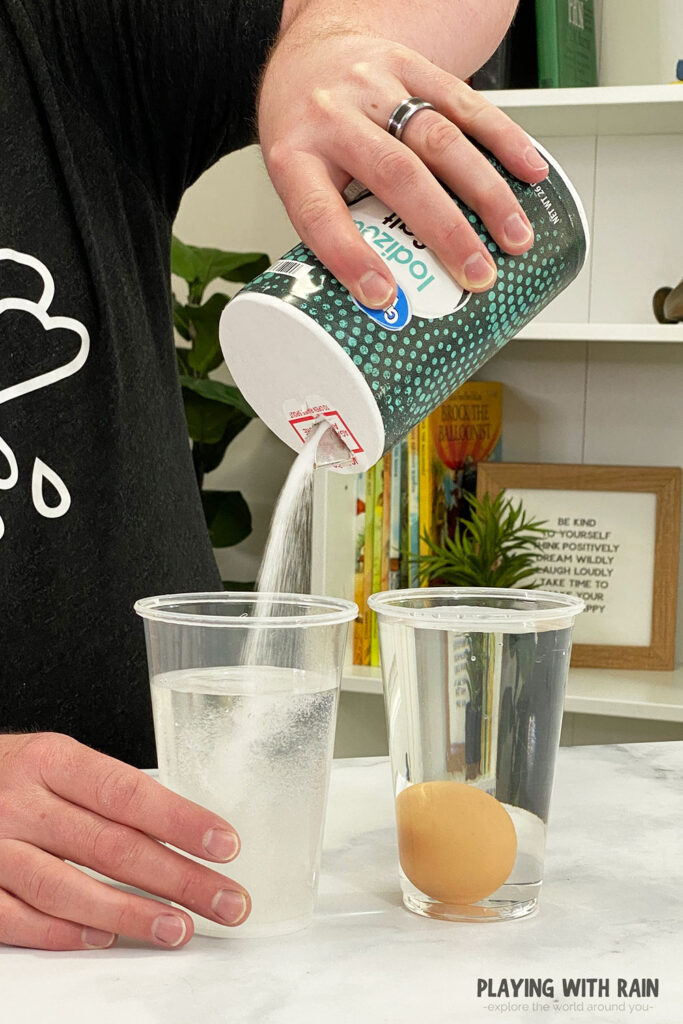
Then pour a generous amount (2-3 tablespoons) of salt into the water and stir it with a spoon until the salt dissolves into the water.
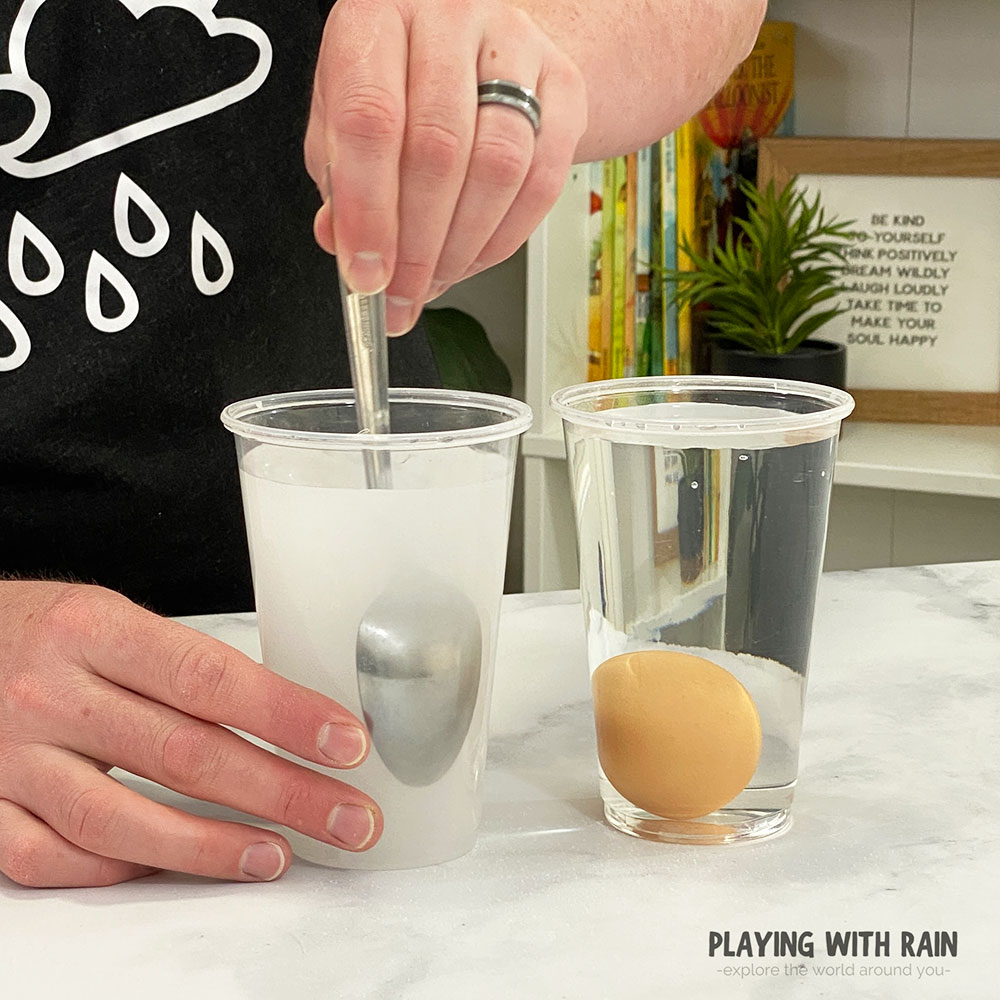
This will take about 30 seconds of stirring. You will know the salt is dissolved when the water changes from foggy looking, to becoming clear again.
Step 4: Set an Egg In The Saltwater
Now it’s time to put the saltwater to the test with an egg. Grab an egg and gently place it into the cup of salt water.
Do you think the egg will still sink to the bottom like it did in the freshwater, or will it float in the saltwater?
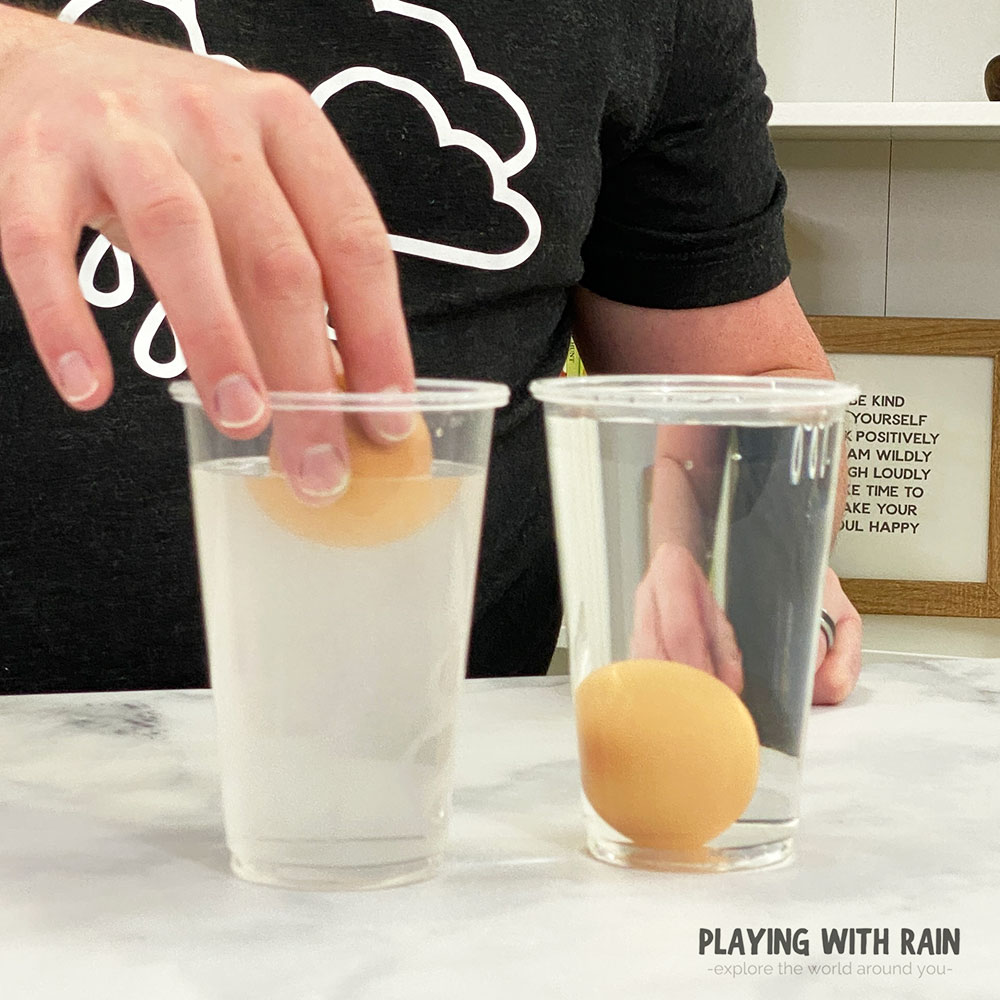
As long as you added a generous amount of salt, the egg should remain floating at the top of the saltwater with a portion of the egg poking out of the water!
Step 5: Mix a Little Less Salt With Water in a Third Cup
Now that we have discovered an egg will float in salt water and sink in freshwater, what do you think will happen if we do the same thing, but mix less salt into the water this time?
Give it a try by again filling a third cup a little more than halfway with water. Then add only a tablespoon or so a salt to the water this time. Mix it with a spoon until it is all dissolved.
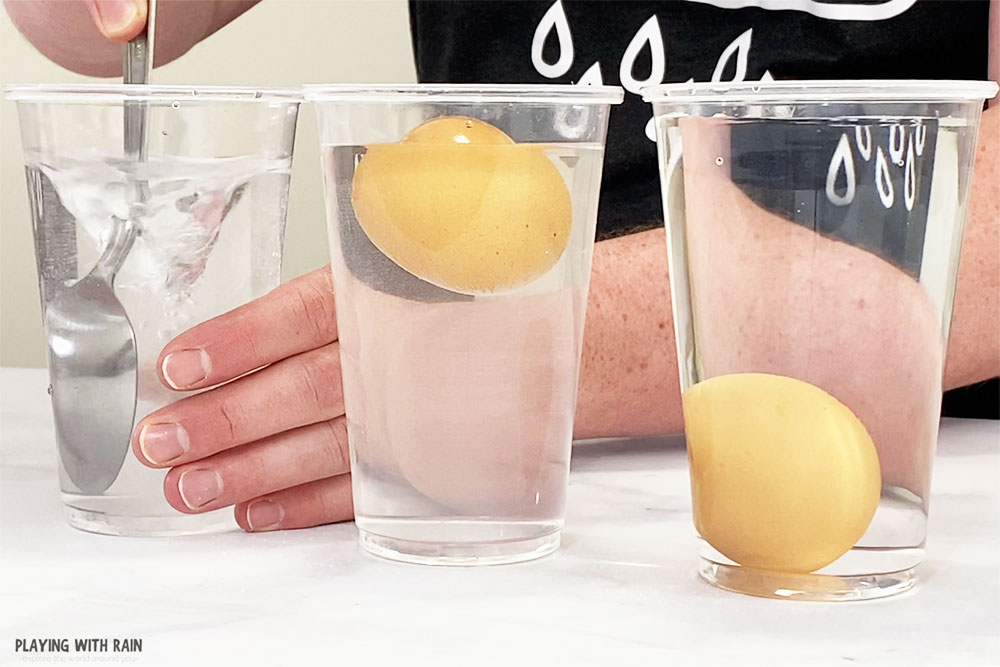
The hope is that with a much more diluted solution of saltwater this time, we can find a perfect balance between the density of the water and the egg to make it neither sink or float and stay suspended in the middle of the cup.
Step 6: Place an Egg in the Third Cup and Try to Make it Hover Between Sinking and Floating
So let’s put it to the test and softly place the egg into the mixture of water and a little bit of salt. Watch very closely what happens to the egg.
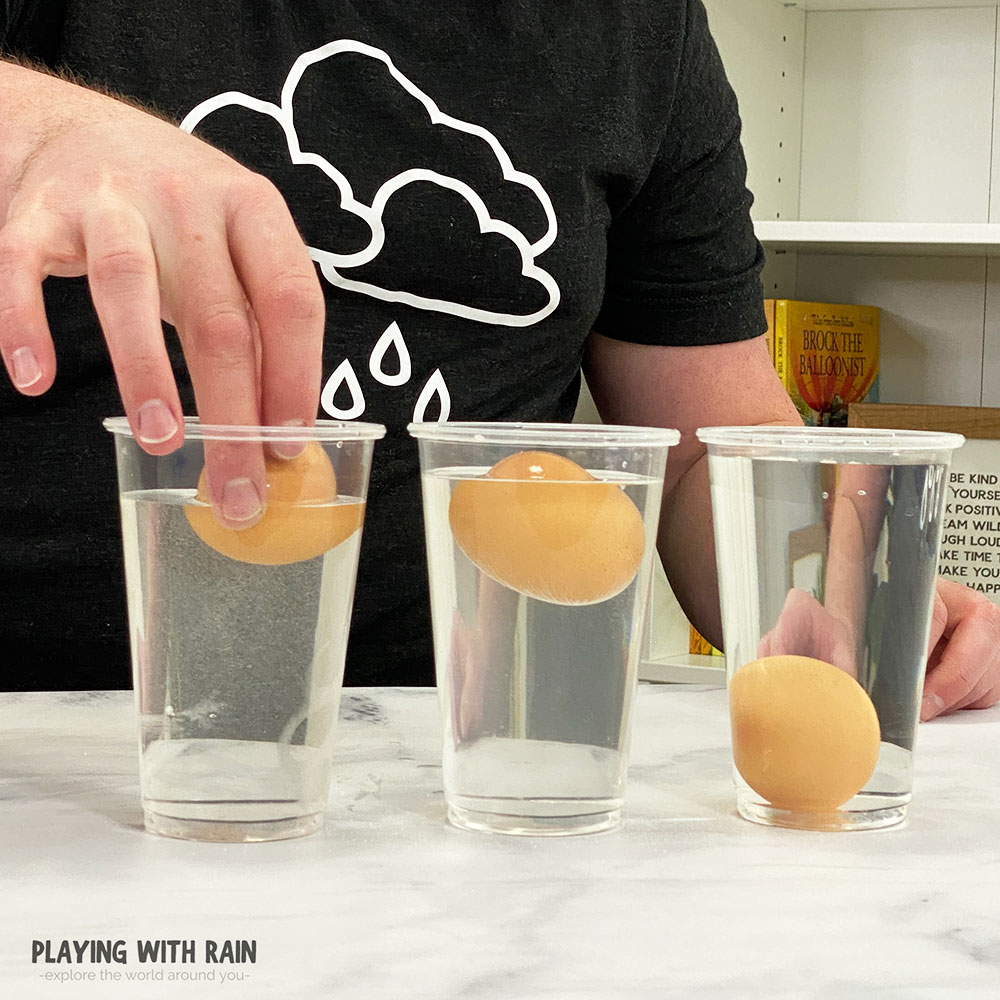
Does the egg slowly sink to the bottom or slowly rise to the top? Or does it do exactly what we were wanting and stay hovering right in the middle of the cup without sinking or floating?
Getting the density of the water just perfect enough to make the egg hover depends on the ratio between the amount of water in your cup and the amount of salt in the water.
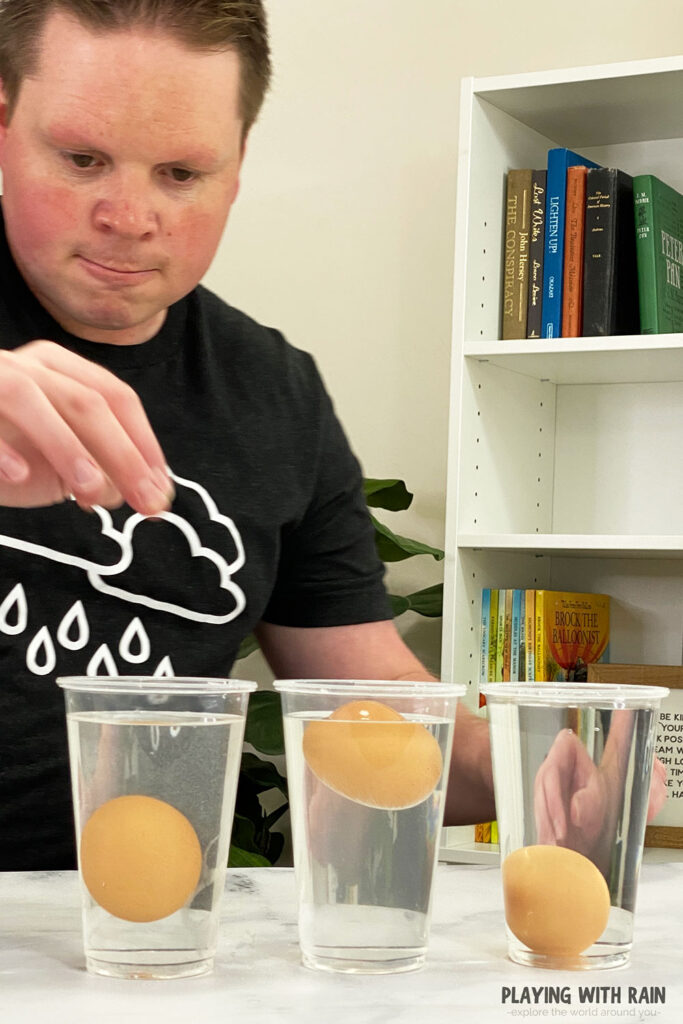
It might take a little bit of trial and error by adding a little more water or a little more salt to get the perfect mixture, but eventually you should be able to get the water to the same density as the egg and make the egg hover!
Why Do Eggs Float in Water?
We were successful with this floating egg experiment thanks to the density that the salt added to the water. Freshwater is less dense than saltwater, so the egg sank in the freshwater.
When we added salt to the water, the salt dissolved into the water and made the water become more dense than the freshwater.
Increasing the density of the water also made the water become denser than the egg and helped the egg to float in the saltwater.
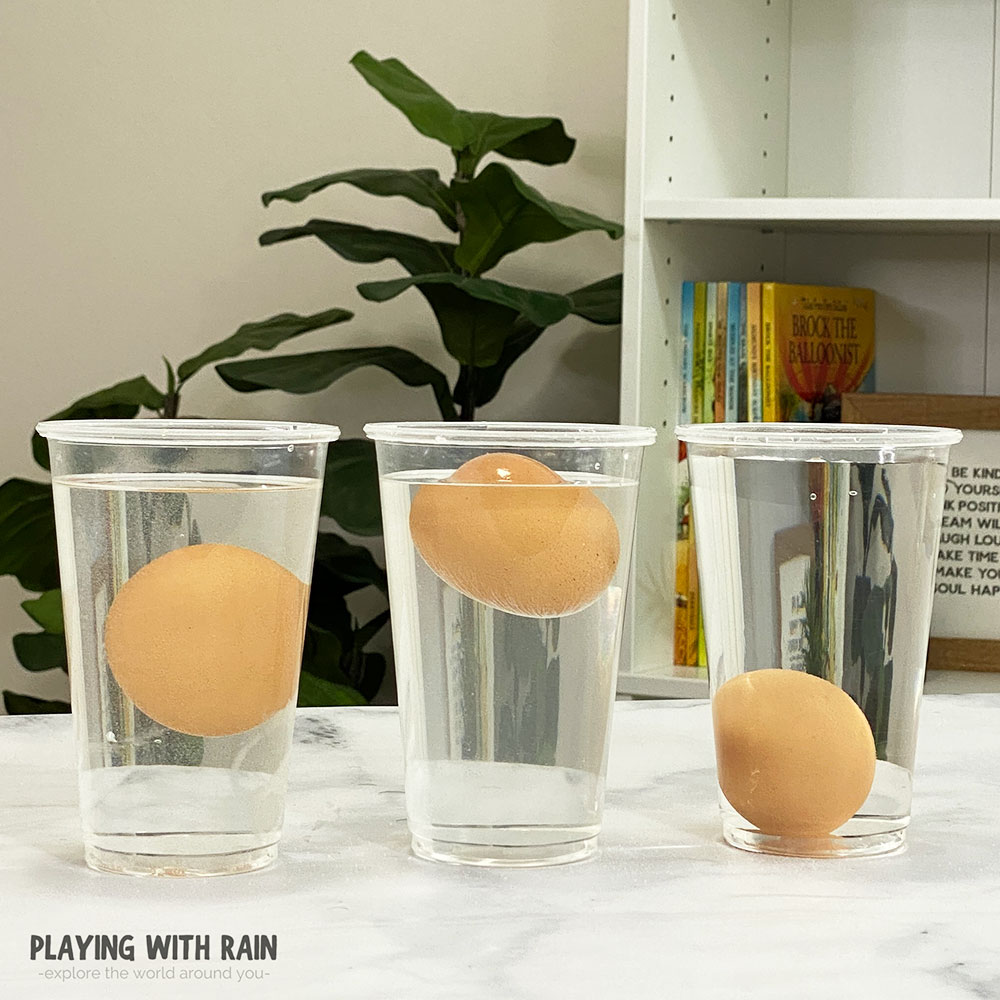
The density of an object vs the density of the liquid an object is placed in is what determines if something sinks of floats.
This means we can either change the density of the object or the density of the liquid to try make something float that would otherwise sink.
In this floating egg experiment, we changed the density of the water by adding salt and left the density of the egg alone, but in this Floating Orange Experiment, we changed the density of the orange and left the density of the water alone.
This floating egg experiment is also a great example of why it is easier to float in the ocean than it is in a lake! The saltwater in the ocean is much denser than the fresh water of a lake so you will float better in the ocean!
PIN THIS EXPERIMENT FOR LATER

Leave a Reply