Have you ever wondered How Does Hail Form? It seems like a mysterious process, but it isn’t as complicated as you might think! In this post, we’ll break down the formation of hail in an easy-to-understand way so that kids can learn about this fascinating weather science. You can also find more fun science experiments for kids here! Let’s get started.
Have you ever seen hail on the ground after a storm?
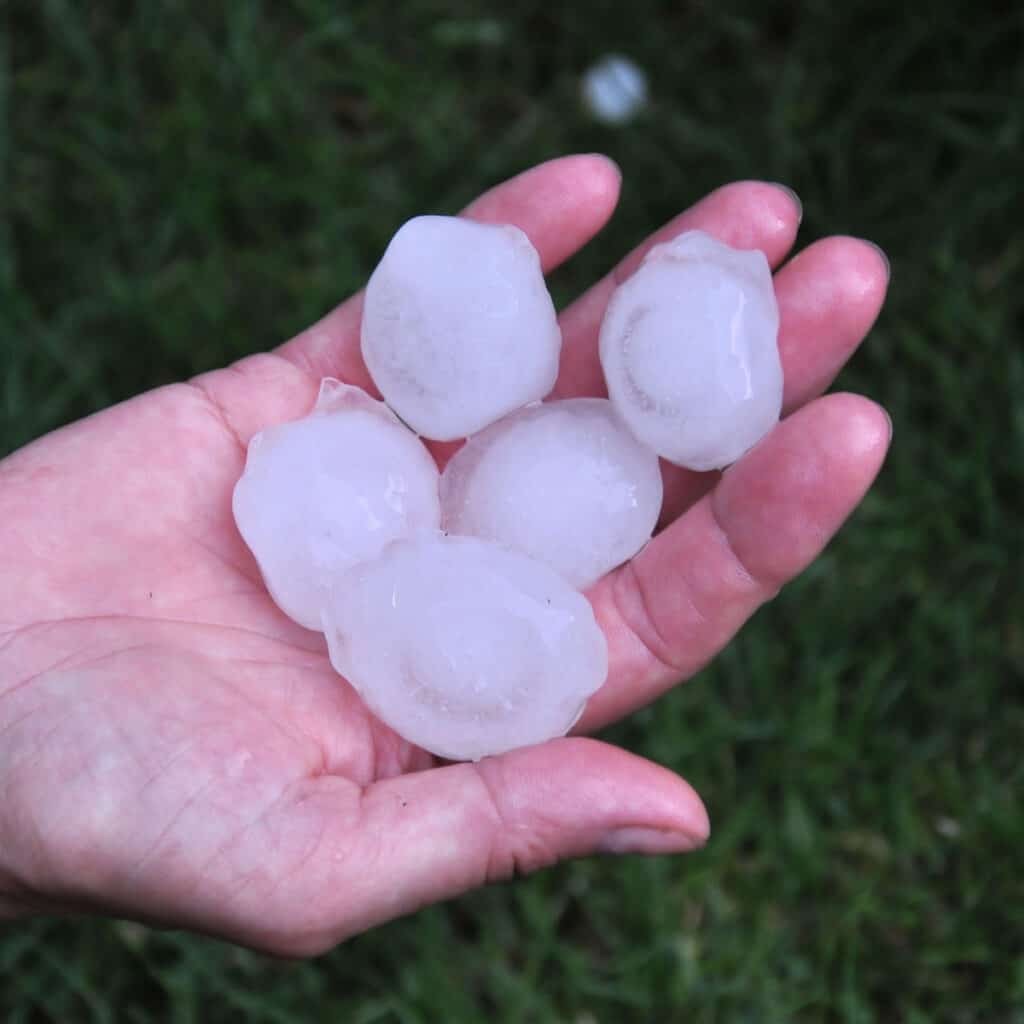
It looks like little pieces of ice and can be quite noisy when it hits your roof. But where does hail come from, and how does it form? Well, let’s take a look at how hail forms and why it’s so important to pay attention to during storms.

The Science Behind Hail Formation
Hail is made up of ice balls that form in the sky during thunderstorms and then fall to the ground. The process actually starts with regular water droplets. These droplets get pushed up high into the clouds by updrafts (which are just strong winds).

Up in the clouds, the water droplets freeze because it is so cold up there.
Now that they are frozen, these balls of ice start to fall back down lower into the cloud where they collect a coating of more water droplets — and then rise back up again! This cycle continues until the hailstone gets too heavy and falls out of the cloud.
The next time you see a thunderstorm outside your window, take a look at what is happening within those dark clouds.
If you’re lucky enough to see a hailstorm, think about how each individual piece of hail was formed by this incredible process of freezing and falling. What an amazing thing to witness!
The Size of Hail
Hailstones come in different sizes depending on what kind of storm they were created in and how much time they had to grow before falling out of the cloud.
Some hailstones can be really tiny, while others can be very large! The largest hailstones ever recorded were almost 8 inches wide!

Hail can range from very tiny pea-size pieces all the way up to softball-size chunks! Scientists have even observed hailstones as big as grapefruits, but thankfully, those don’t occur too often.
Large chunks of hail can do a lot of damage to cars, buildings, or crops, so it’s best to take cover if there’s a severe thunderstorm alert in your area.
The Benefits of Hail
Although hail can be destructive, it also has some benefits for us humans!
For example, we use hail measurements in weather forecasting because they help us understand how much upward motion is happening in the atmosphere which gives us an idea of what kind of storm might be coming our way!
Rain can be essential for the growth of crops and vegetation, but hail is just as vital in providing natural fertilizer to supply nutrients to soils. This is because when the hailstones melt, they release minerals and components that are beneficial to the plants and help to enrich the soil.
The melting process also helps to improve water infiltration, as the tiny droplets of water produced by the melted hail can easily percolate down to the roots of the plants and provide much needed moisture.
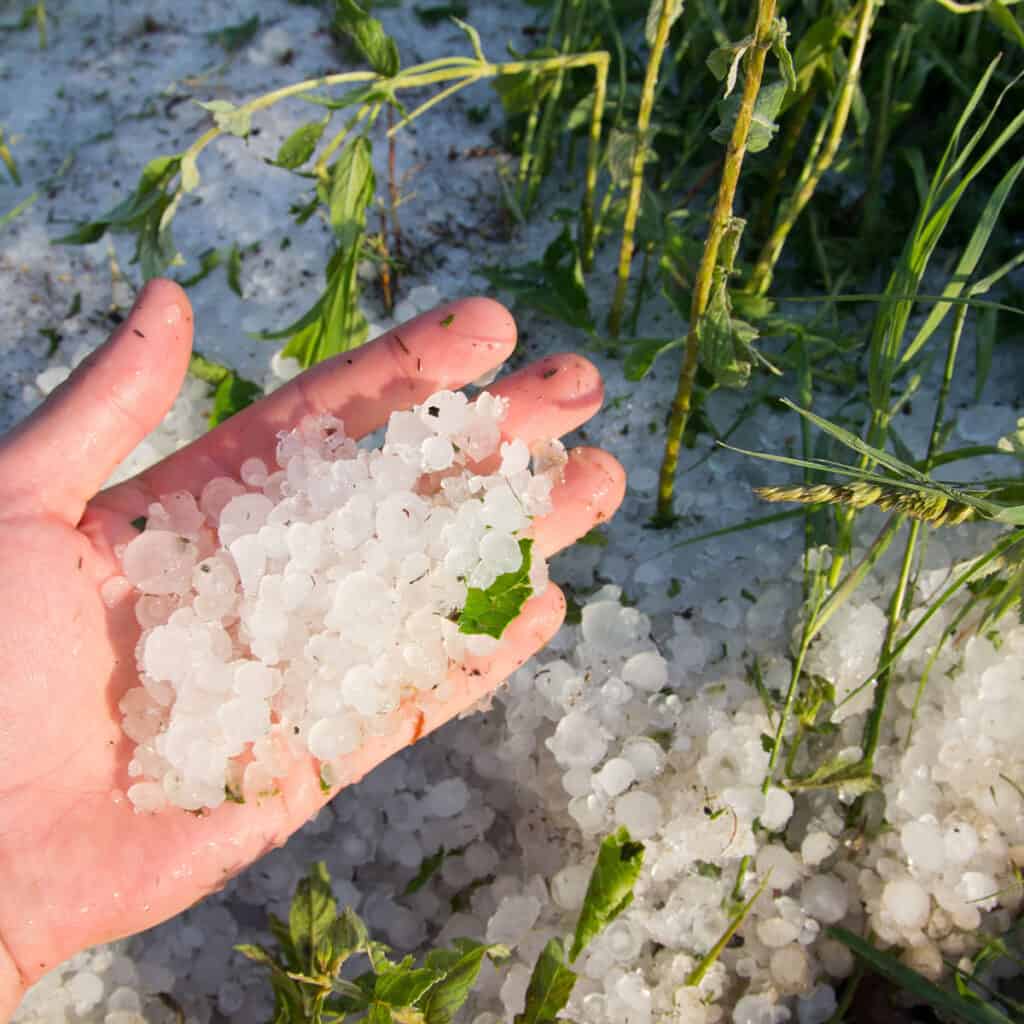
The formation of hail plays an important role in cooling the Earth, as well as providing natural fertilizer for crops and soil.
When hail falls to the surface of the Earth, it reflects some of the sunlight that hits it back into space, thus cooling down our planet. This phenomenon is referred to as albedo, which determines the amount of light that is bounced back into our atmosphere.
Fun Facts About Hail
Hail is created when warm air collides with cold air — usually during thunderstorms.
And did you know that hail can also form outside of thunderstorms?
If a thunderstorm develops over a lake or ocean, some of those icy hailstones will freeze over due to contact with supercooled water droplets — which are just regular water droplets that remain liquid at temperatures below freezing point.
This type of hail is called “glaciated” hail because it forms over bodies of water instead of land!
Cool, right?
As you have learned, hail forms when warm air collides with colder air in thunderstorms – or sometimes even outside them – creating icy hailstones that eventually fall to Earth.
It’s amazing how something so small can cause so much damage if it falls from far enough above us! Learning about how hail forms helps us better understand our environment and why certain weather events happen.
We hope you felt smarter after reading this blog post — happy learning!
More Resources
- How Does Hail Form – Science Experiment
- Thunderstorm Science Experiment
- 3 Easy Ways To Make a Cloud in a Bottle

Leave a Reply