Enjoy this super fun twist on the classic baking soda and vinegar reaction! We will use the carbon dioxide bubbles created from baking soda and vinegar mixed with water to create a dazzling show with this Dancing Grapes Experiment.
Get more Fun Water Experiments here!
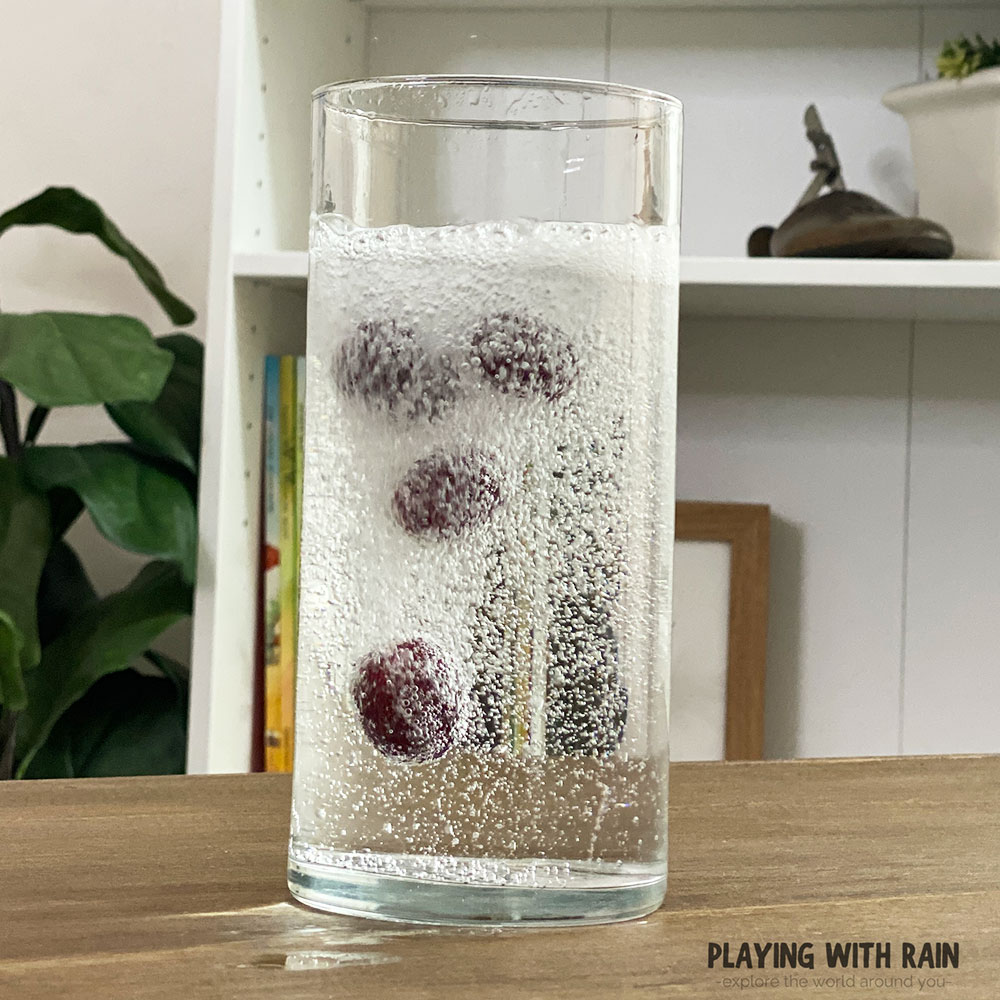
Most, if not all of the materials needed for this experiment are likely already in your kitchen! Your kids will love learning about the chemistry that makes the grapes dance around in the water too!
Dancing Grapes Experiment
This post may contain affiliate links. As an Amazon Associate, I earn from qualifying purchases.
Supplies Needed:
- Grapes
- Tall Glass or Jar
- Spoon
- Water
- Baking Soda
- Vinegar
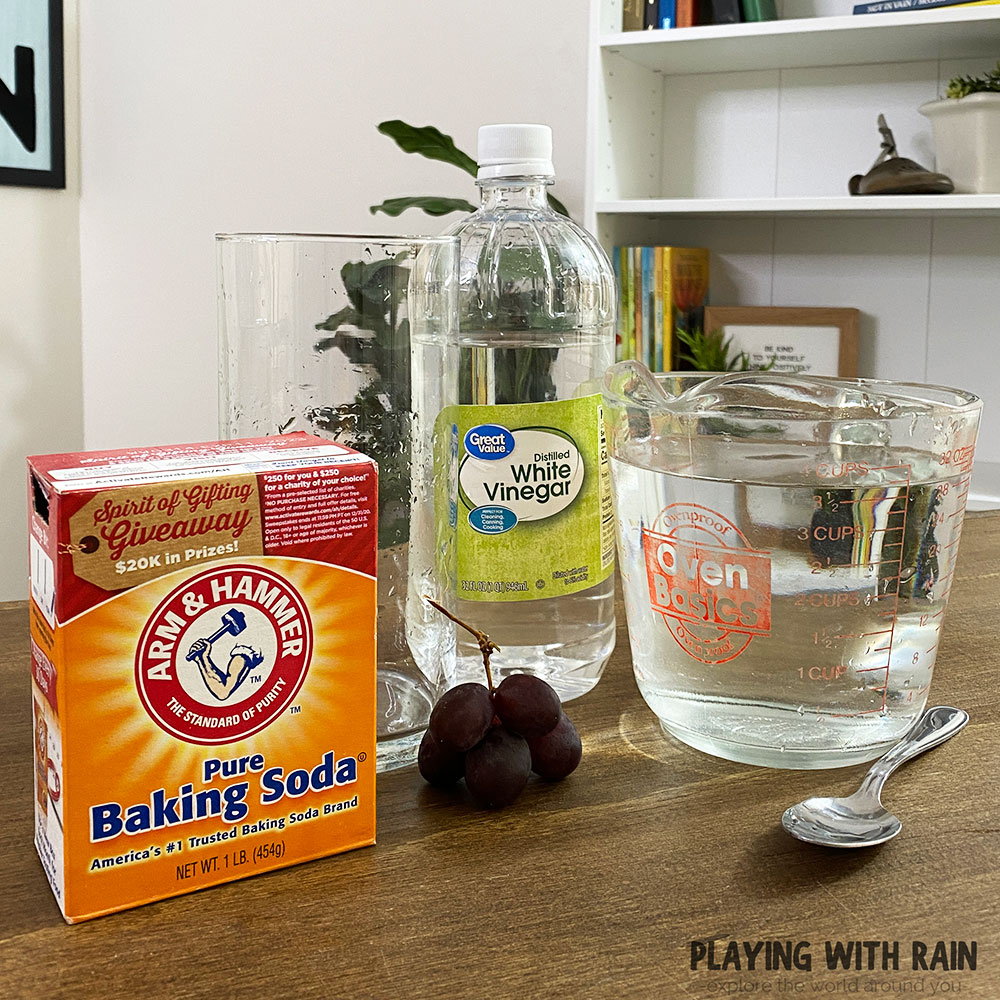
Floating Grape Experiment
- Fill a clear, tall glass or cup about halfway with water.
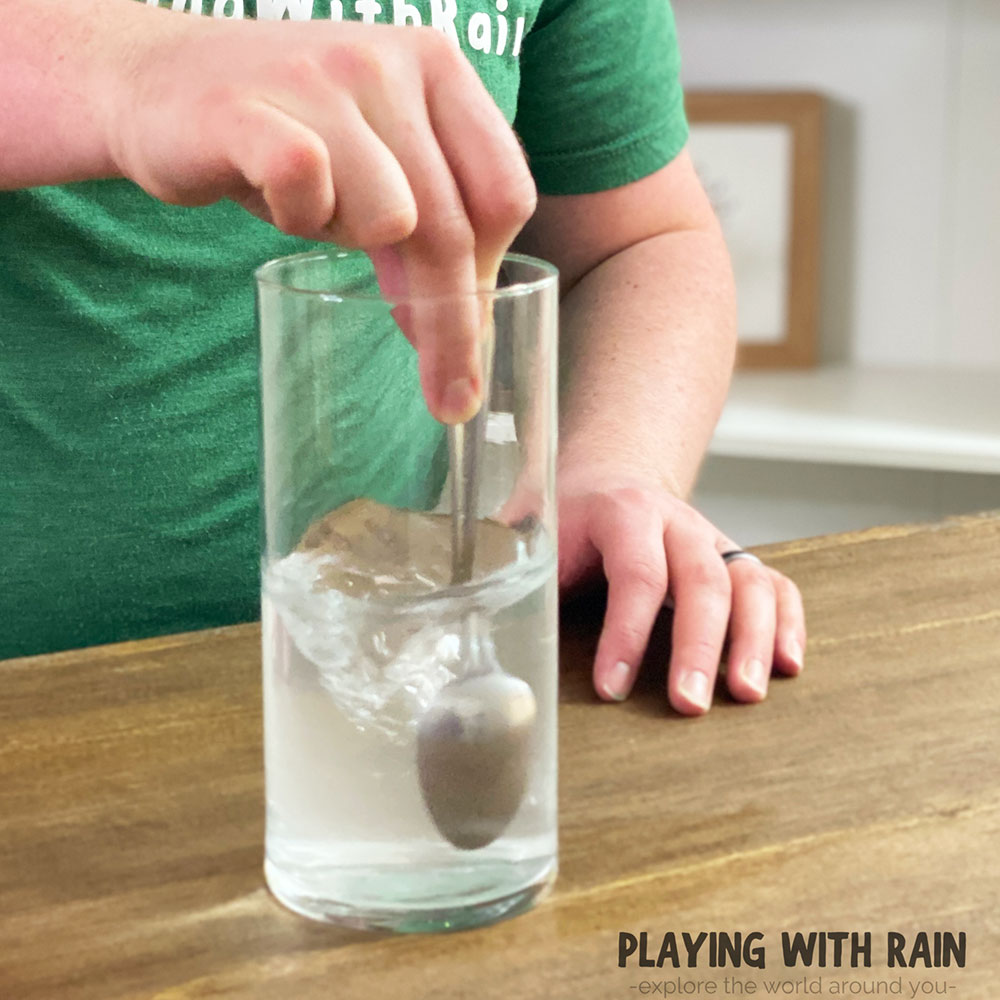
- Stir in a couple spoonfuls of baking soda until its dissolved in the water.
- Drop about 4 or 5 grapes into the glass.
- Pour some vinegar into the glass and watch the grapes move up and down and dance around in the water!
Step 1: Pour Water Into a Clear Glass
To get started with this fun dancing grapes experiment you need to fill a clear and clean glass of water just a little over halfway full with water.
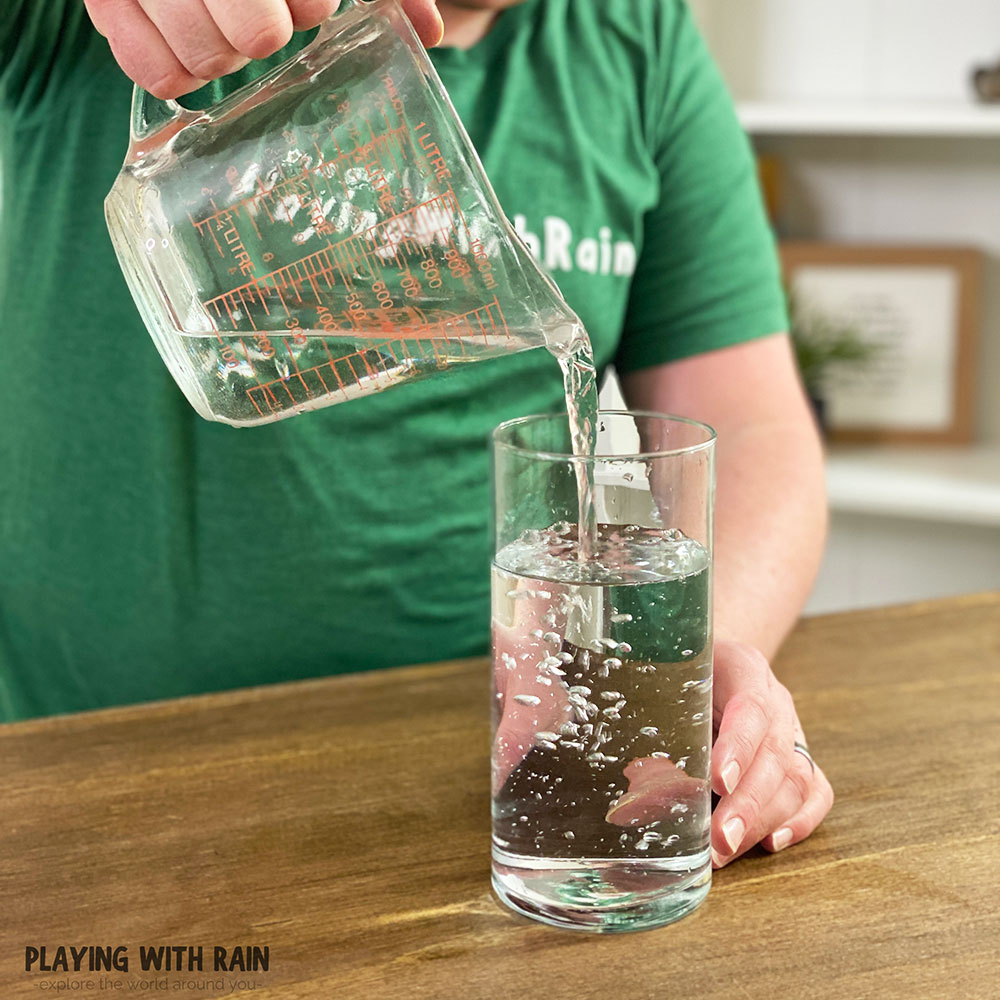
This will leave enough room to add the rest of our ingredients into the glass before making the grapes dance around all over the place.
Step 2: Add 2 Spoonfuls of Baking Soda and Mix Into Water
Now add some baking soda into your glass of water. You really don’t need to be super accurate in how much you put in, but 2 or 3 spoonfuls should be plenty.
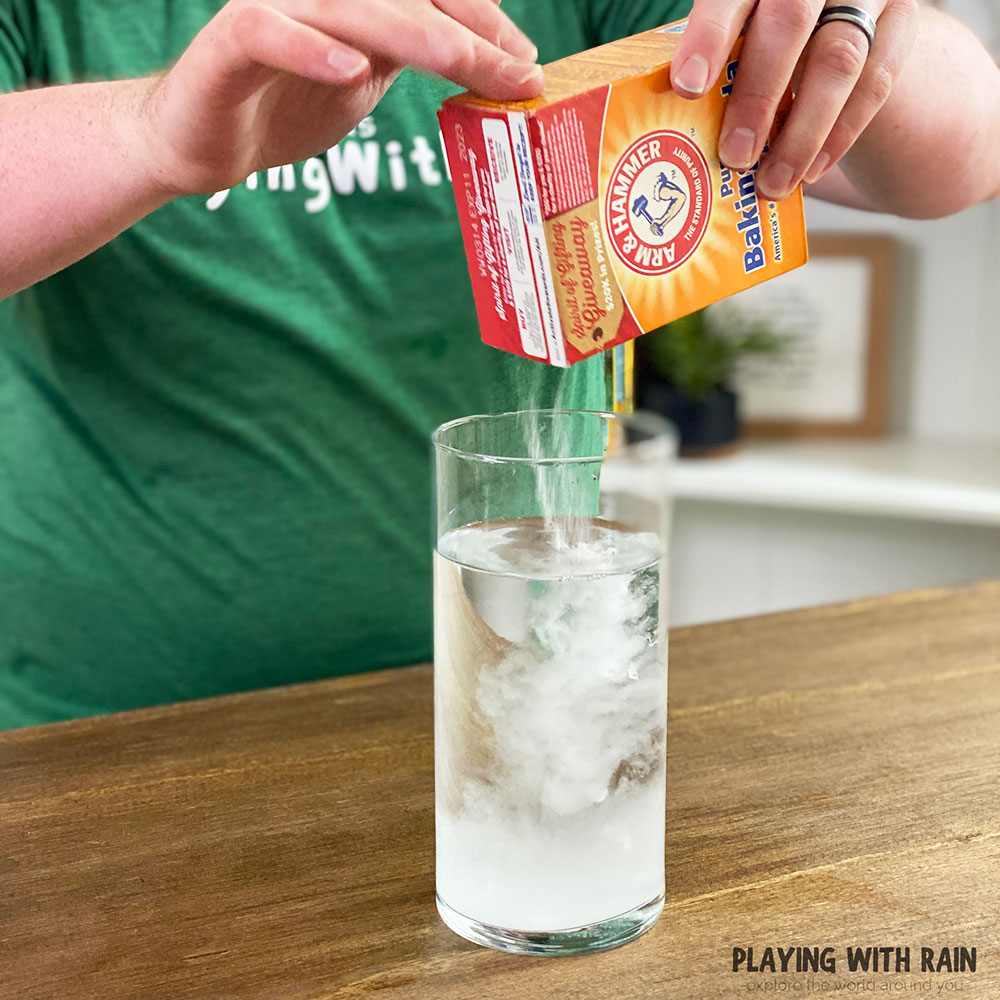
If anything, being a little more on the generous side with the baking soda will ensure that your grapes will dance around a little bit longer inside the glass!
After pouring the baking soda into the water it is important to stir it in until it dissolves in the water.
You will know when the baking soda has dissolved when the water turns from the fizzy, foggy look, back to looking nice and clear.
Step 3: Put 4 or 5 Grapes in the Glass
After mixing and dissolving the baking soda into the water, grab about 4 or 5 grapes and slowly drop them into the mixture.
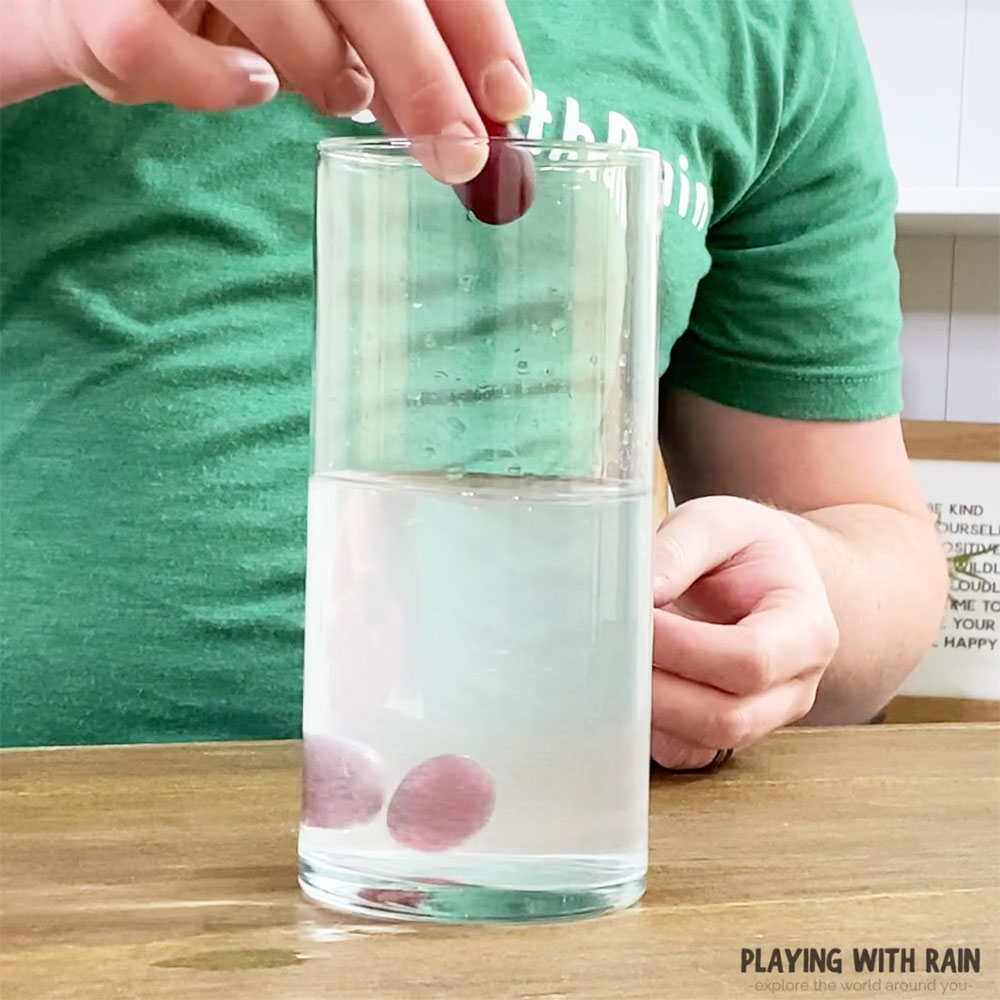
Watch and observe what the grapes do as you drop them into the water. Do they float or sink!?
Step 4: Add Vinegar and Watch the Grapes Dance Around
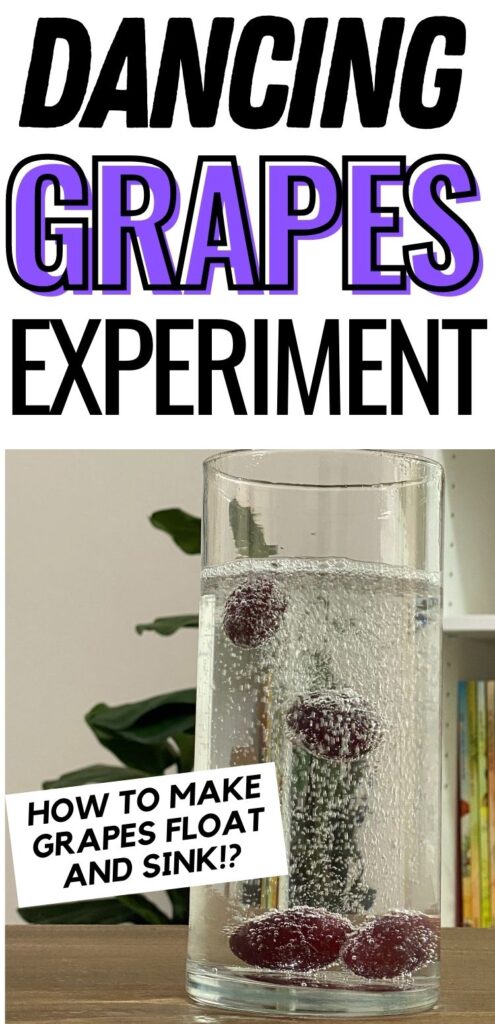
The fun part has now arrived! With your grapes all sunk to the bottom of the glass, slowly pour some vinegar into the glass to kick of a stunning dance show!
The vinegar will immediately begin reacting with the dissolved baking soda in the water and start fizzing and bubbling. Continue slowly adding vinegar as the fizz allows until the liquid level is near the top of the glass.
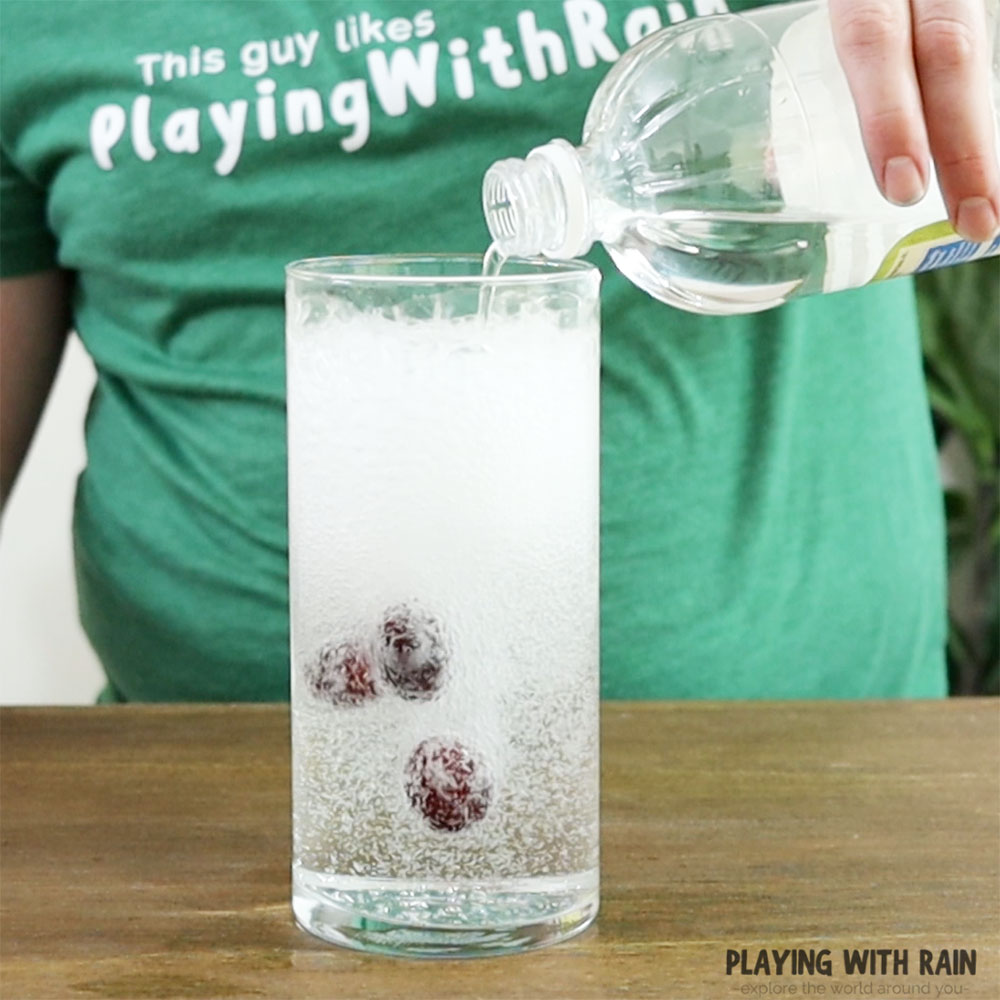
The bubbles created from this classic baking soda and vinegar reaction will attach themselves to the grapes and eventually pull the grapes to the top of the water!
For another unique way to witness the power of the classic baking soda and vinegar reaction check out this cool Baking Soda and Vinegar Balloon Experiment.
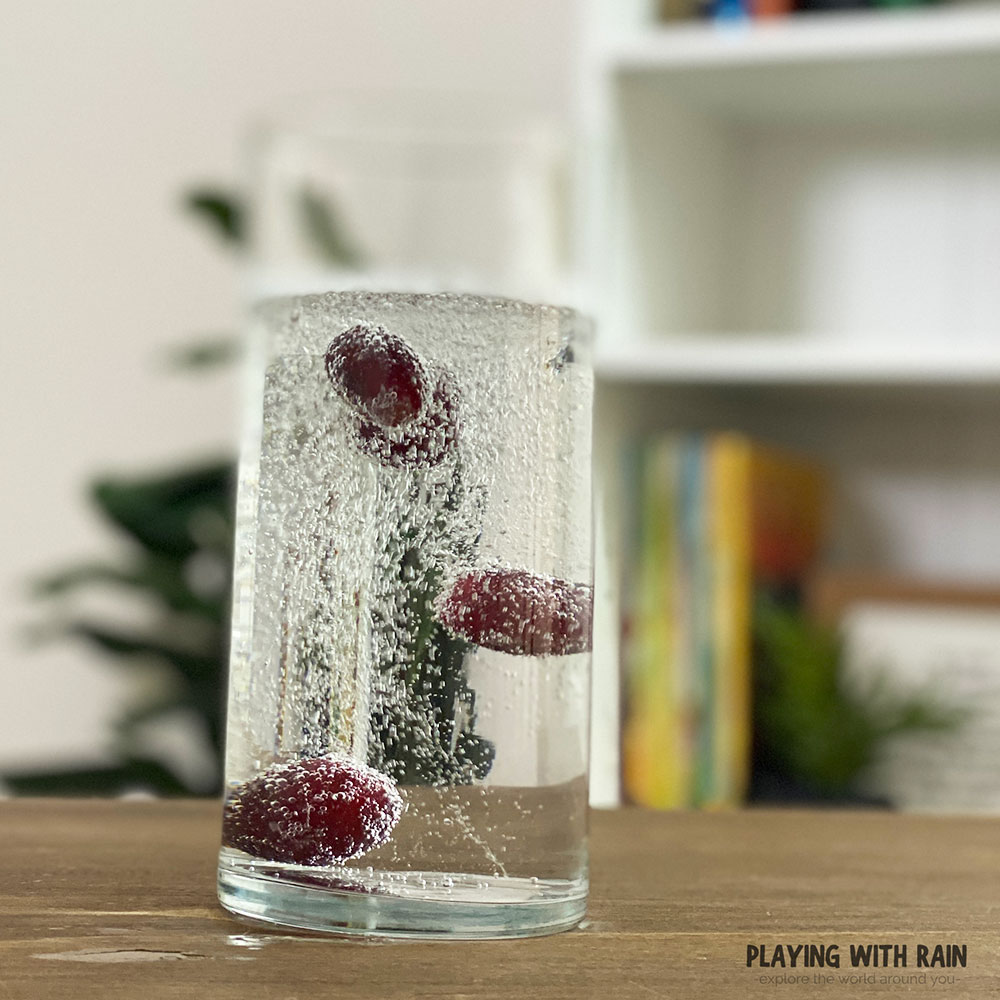
As the grapes float to the surface, the bubbles will burst and the weight and density of the grape will allow gravity to pull it back down to the bottom of the glass.
This cycle will continue to repeat for several minutes until all the carbon dioxide bubbles in the water have escaped into the air. This should keep your grapes dancing and bouncing up and down for a few minutes!
Why Do Grapes Float in Sparkling Water?
In this dancing grapes experiment, we basically made homemade sparkling water by mixing water, baking soda, and vinegar together. You can also make grapes dance using carbonated water, or any kind of soda pop.
The secret to why the grapes dance around inside the glass is thanks to the chemical reaction that occurs when baking soda and vinegar are mixed together.
Carbon dioxide bubbles are created from the baking soda and vinegar reacting in the water. These are also the same bubbles you would find in a carbonated drink.
These tiny little carbon dioxide (CO2) bubbles collect on the surface of the grapes and eventually gather enough force to pull the grapes to the top of the water.
When the grapes reach the top of the water, the air bubbles pop and the weight of the grape makes it sink back to the bottom to repeat the process again.
PIN THIS EXPERIMENT FOR LATER

Leave a Reply