This fun and simple science experiment only requires a few household materials along with some adult supervision to teach kids about the high heat capacity of water. Here is How to Fireproof a Balloon.
Get more fun and simple Weather experiments for kids here!
PIN THIS EXPERIMENT FOR LATER

This experiment is super fun, and should only take 10 minutes or less to gather up the supplies around your house and enjoy some eye-popping (and balloon-popping) excitement!
How to Fireproof a Balloon
This post may contain affiliate links. As an Amazon Associate, I earn from qualifying purchases.
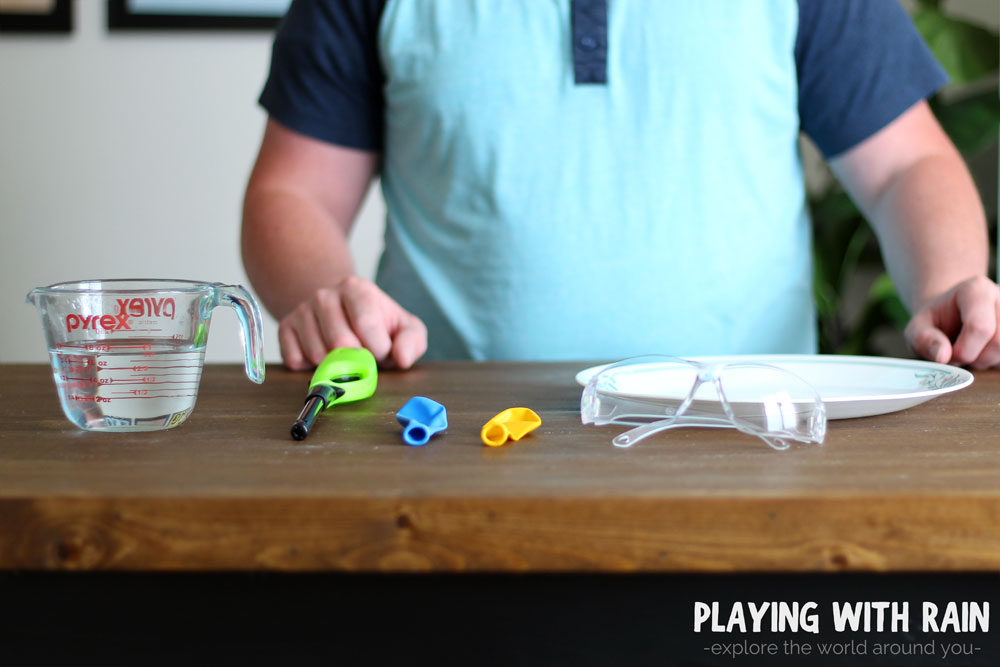
Supplies Needed:
- Safety glasses
- 2 Balloons
- A Long Stem Lighter
- Water
- Adult supervision
Steps:
- Blow up the first balloon with air
- Ignite the lighter
- Don’t forget to put your safety glasses on
- Slowly lower the balloon closer to the flame until it pops
- Fill the second balloon with water and then air it up
- Hold the water-filled balloon from the top and lower it towards the flame
- Remove the balloon from the heat and examine the balloon
Step 1: Blow up the first balloon
Use your mouth, or you can use an inflation pump if you choose to fill one of your balloons with air. It doesn’t really matter how big or small the size of the balloon as long as you are consistent with the size for both balloons.
One important thing to consider though is that the larger you blow up your balloons, the larger the explosion will be when the balloon pops!
Once you have blown your balloon up to your desired size, be sure to tie if off so that it holds the air.
Step 2: Light your lighter
This is where the adult supervision becomes very important as we will be playing with fire.
If you are using a lighter, then you will need to hold the lighter steady with one hand under the balloon, while holding the balloon above the lighter with the other hand.
You can also use a candle for your flame source. The benefit of using a candle is that it will free up your other hand from holding the lighter while giving you two hands to hold the balloon. Check out this Balloon and Candle Experiment to see this experiment done with a candle instead of a lighter.
Step 3: Don’t forget your safety glasses!
This is probably the most important step of the experiment because safety is always important!
Now that we have a balloon aired up and a flame going, you will need to put your safety glasses/ safety goggles on. This will protect your eyes from any flying balloon pieces when the balloon explodes!
I might even recommend putting your eye protection on at the very beginning of the experiment and not waiting until step 3. This will help you not forget about your safety once you are in the middle of all the fun!
Step 4: See how close you can get your balloon to the flame before it pops
Now that your balloon is aired up, your flame is burning, and your goggles are on, you are ready to see what happens when you heat your balloon up with the flame.
Whether you are using a candle, or a long stem lighter, hold your balloon from the top and lower the bottom of the balloon closer to the flame below it.
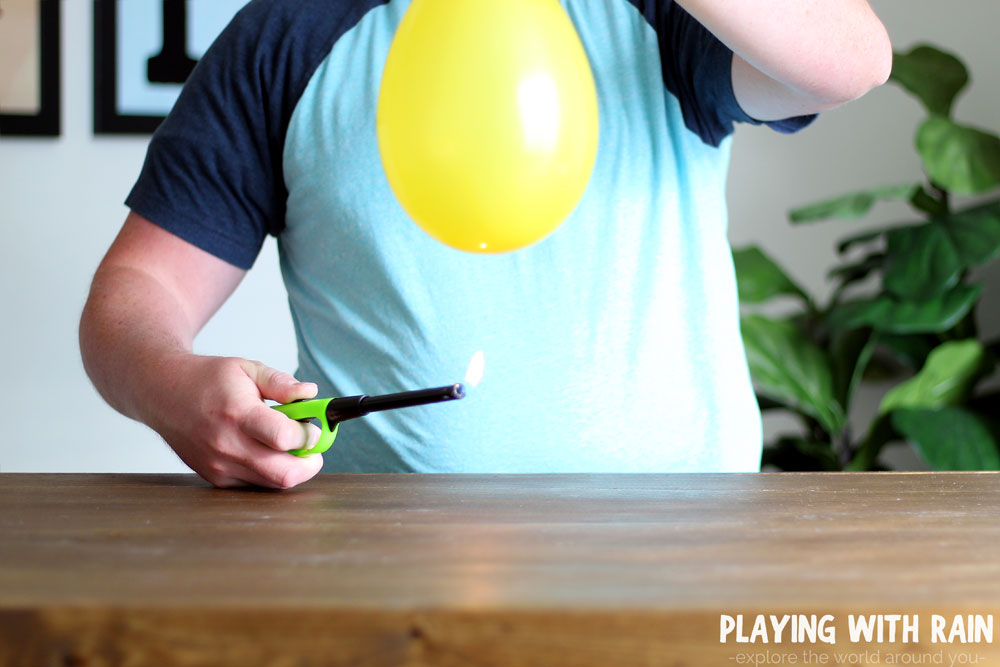
The thin latex on the balloon will start to heat up and weaken due to the flame below it. Eventually the pressure inside the balloon will become high enough to burst the balloon before the flame even touches the bottom.
No matter how prepared you are for it, this is the part that will always surprise you since there is no way to know exactly when the balloon will bust in your face (Another reason to wear eye protection)!
Step 5: Fill the second balloon with water and air and try again
Now that we know the balloon with just air will quickly pop when heated up from the flame, let’s see what happens when we add a little water inside the balloon.
Before inflating your second balloon with air, simply pour a little bit of cool, or room temperature water into the deflated balloon. Using a measuring cup with a pouring spout, or small funnel will help with this step.
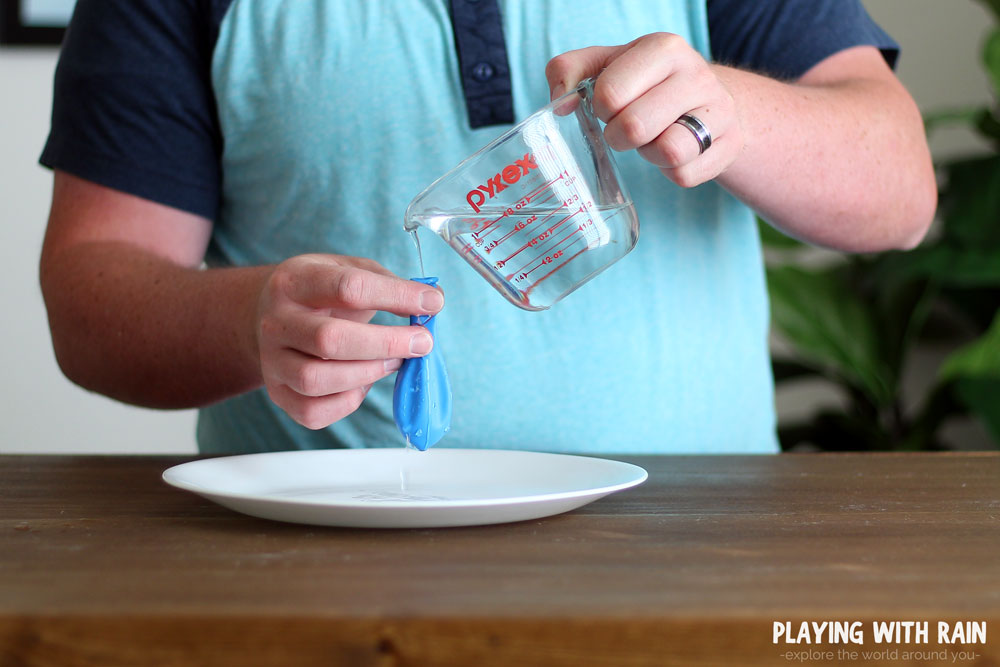
Once you have filled the balloon with the small amount of water that it will hold, go ahead and inflate it with air to about the same size as your first balloon and tie it off.
Step 6: Lower the water-filled balloon towards the flame
Now that we have a balloon filled with mostly air, and a little puddle of water in the bottom, go ahead and repeat step 4 with this new balloon and see what happens!
Depending on how brave you are, you can actually lower the bottom of the balloon to touch the flame and it still should not pop! The water inside your balloon has made your balloon fireproof…for a little while anyway.
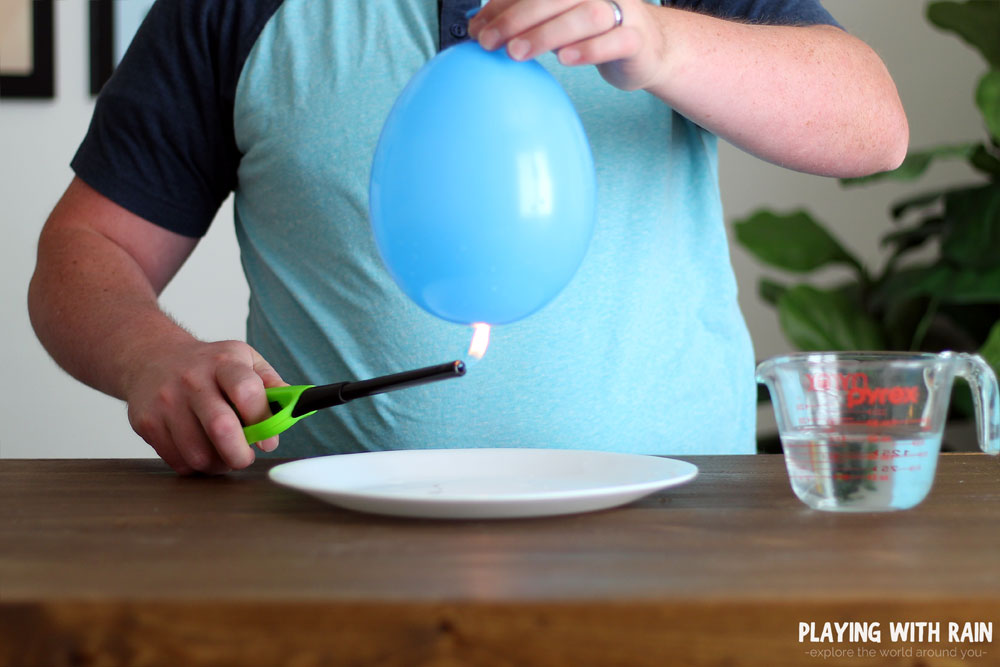
I tried this several times and depending on much much water is in your balloon and how large your balloon is will determine how long your balloon can resist popping against the flame.
Step 7: Remove the balloon from the flame and examine the bottom of the balloon
Your balloon might not have popped while holding it over the flame, but it will look a little bit different where the flame was in contact with the bottom of the balloon.
You will notice some black soot on the bottom that appears to have burnt the balloon. Believe it or not the balloon is perfectly fine and not burnt or damaged.
The black soot on the balloon is a result of the carbon deposited from the flame onto the balloon. You can actually take a wet paper towel and wipe most of it off your balloon and it will look perfectly normal again!
Pretty cool huh!? Not lets dive into the science behind how the high heat capacity of water is what really keeps your balloon from popping over the flame!
Why Does a Balloon Filled With Water Not Pop?
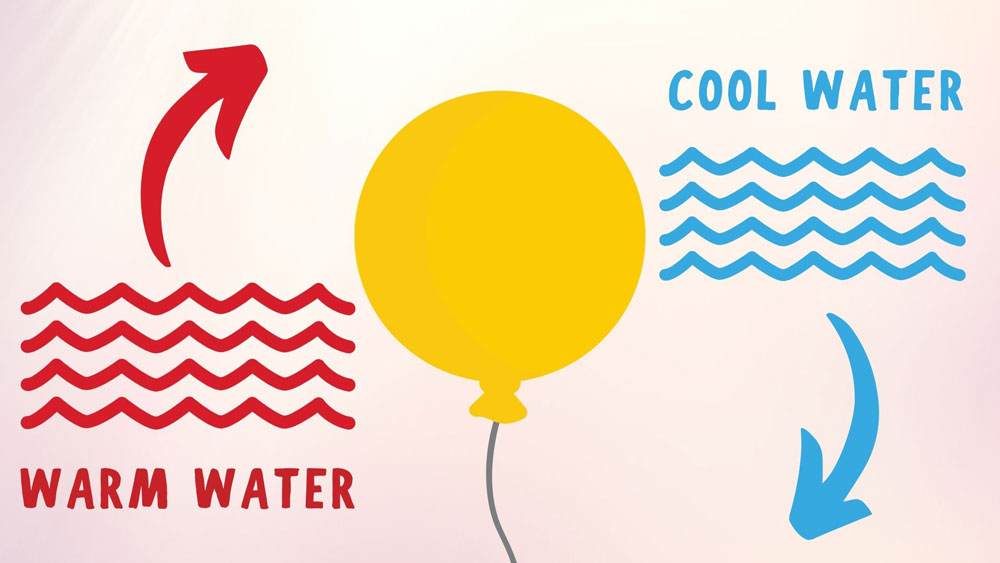
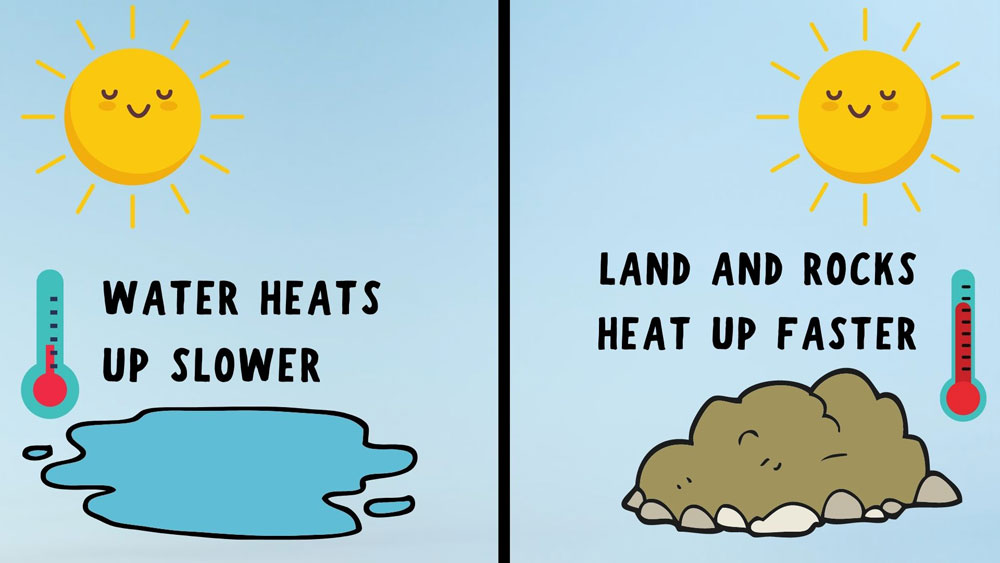
Water has a much higher heat capacity than other materials such as rocks and dirt. This high heat capacity of the water in the bottom of the balloon quickly absorbs the heat from the flame and keeps the latex cooler.
The water that is heated by the flame then rises to the top of the puddle and is replaced to cooler water that is then heated up and rises. This cycle continues to keep the balloon from popping until all of the water is heated.
Try some variables:
You can try different variables like different sizes of balloons, how much water is in your balloon, and how long you hold it over the flame to see if that changes how long your balloon remains fireproof.
How Does the High Heat Capacity of Water Influence the Weather?
Thanks to water’s incredible ability to absorb heat and energy, areas near large lakes and oceans are typically more temperate than areas surrounded by land.
For example, a place like Honolulu, Hawaii that is surrounded by the ocean often times only sees daily temperature fluctuations between high and low temperatures of about 10°F.
Meanwhile, areas like Phoenix, Arizona that are landlocked and away from large bodies of water can see vary large daily temperature fluctuations between the high and low temperatures of over 30°F.
PIN THIS EXPERIMENT FOR LATER

Leave a Reply