Eggshells are usually very hard, fragile, and crack easily, but this Flexible Eggshell Experiment uses household supplies to magically transform a hard eggshell into a flexible, bendable eggshell!
Find more Vinegar Experiments right here!
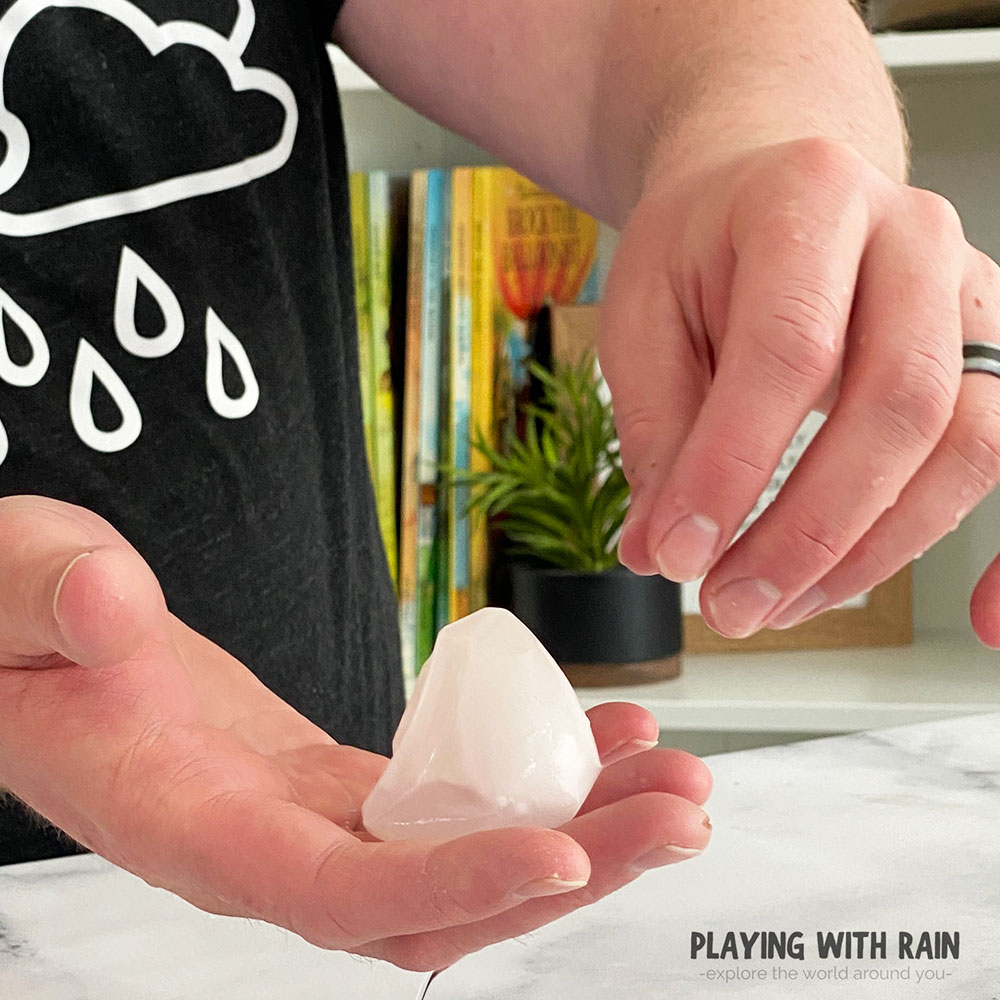
Not only will your kids be amazed at the science behind making these flexible eggshells, but parents and adults will also find this very fascinating!
Flexible Eggshell Experiment
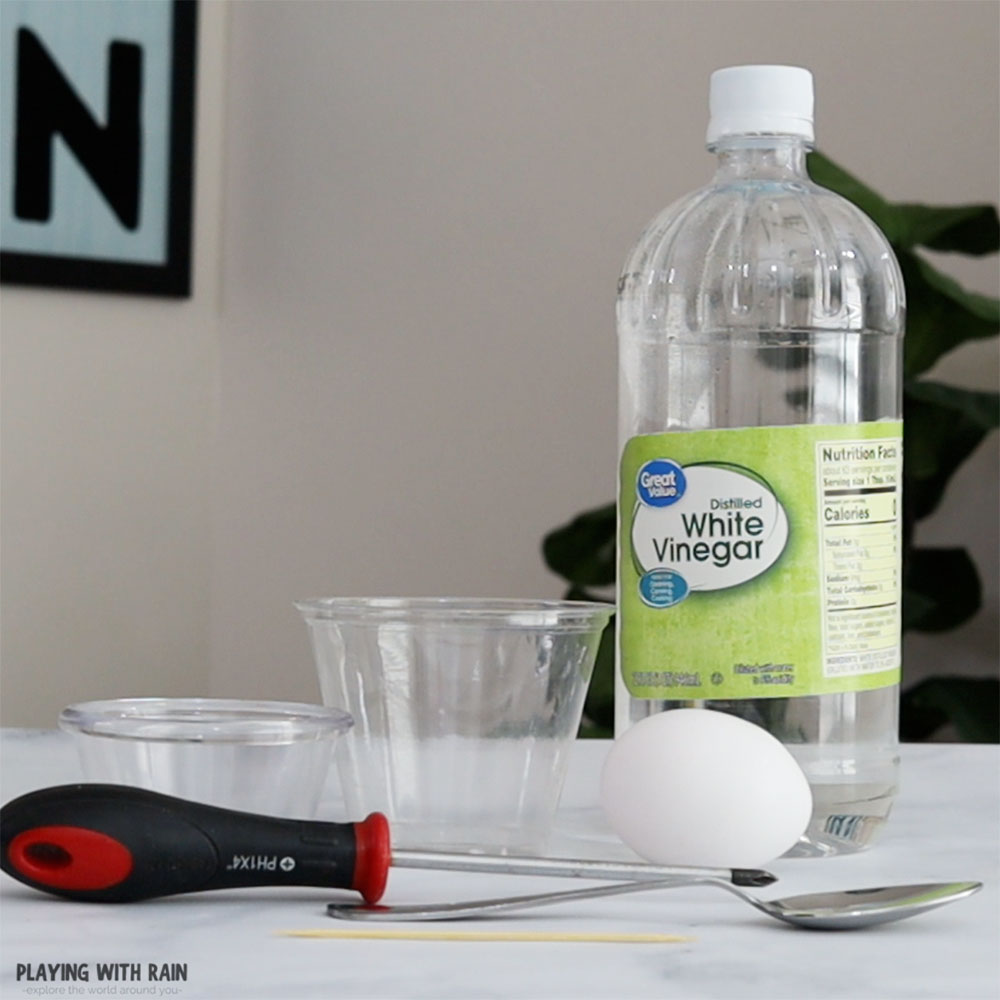
Supplies Needed:
- A Small Phillips Screwdriver
- Toothpick
- 1 Raw Egg
- Cup
- Vinegar
- A Spoon
Eggshells and Vinegar Experiment
- Poke a hole in each end of a raw egg.
- Stick a toothpick into one hole and scramble the inside of the egg.
- Blow the egg yolk and white out of the eggshell.
- Place the hollow eggshell into a cup of vinegar for 2 days.
- Get the eggshell out of the vinegar after 48 hours and rinse it in water.
- Play with your new flexible eggshell!
Step 1: Poke a Hole in Each End of a Raw Egg
To get started, use a small screwdriver or another pointy and sturdy object to poke two holes in a raw egg.
Carefully poke one hole in the top of the egg, and another hole in the bottom of the egg.
Do this by applying a little bit of pressure with a phillips screwdriver while gently turning the screwdriver.
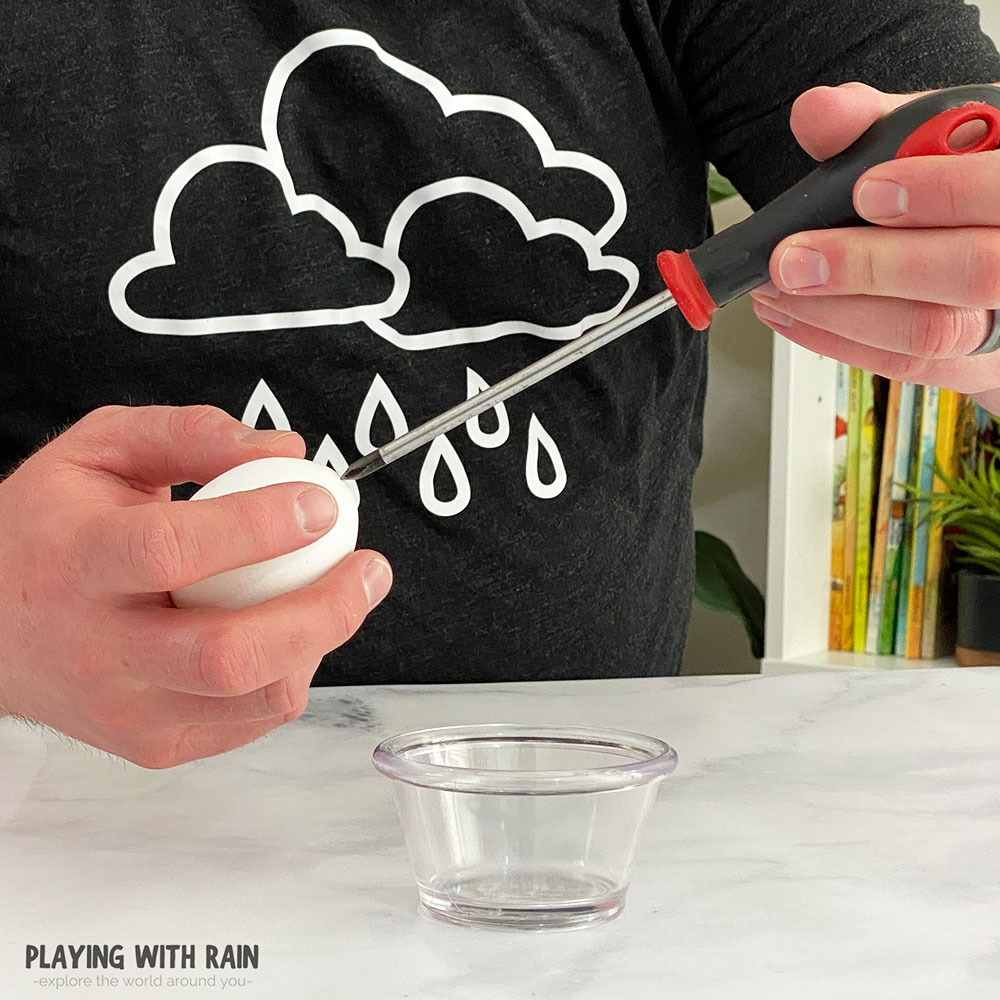
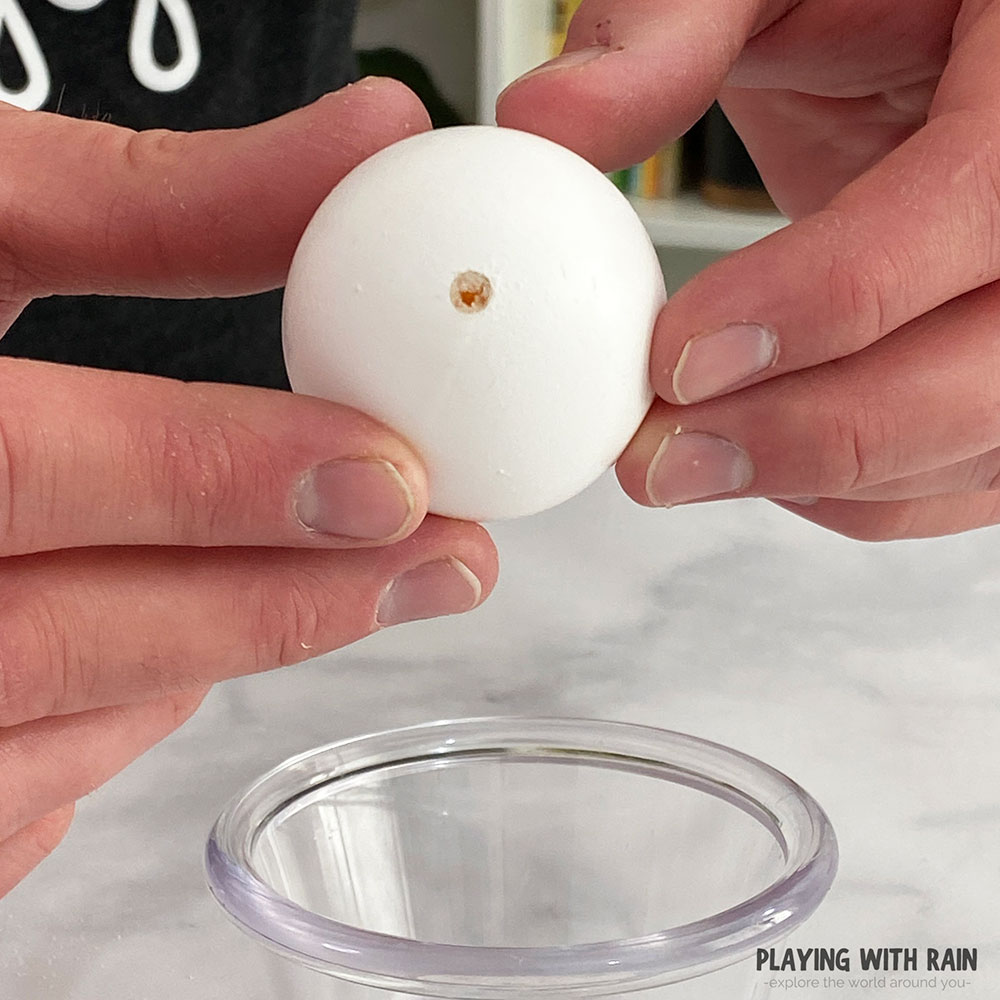
Eventually you should break through the egg with the screwdriver and create a small hole in the eggshell.
Repeat this process to create a hole in the bottom of the egg as well.
Step 2: Stick a ToothPick Into One Hole and Mix The Inside of The Egg
Now hold the egg over a bowl, sink, or trashcan and stick a toothpick into the egg through one of the holes you made.
Use the toothpick to stir the egg inside and break the yoke.
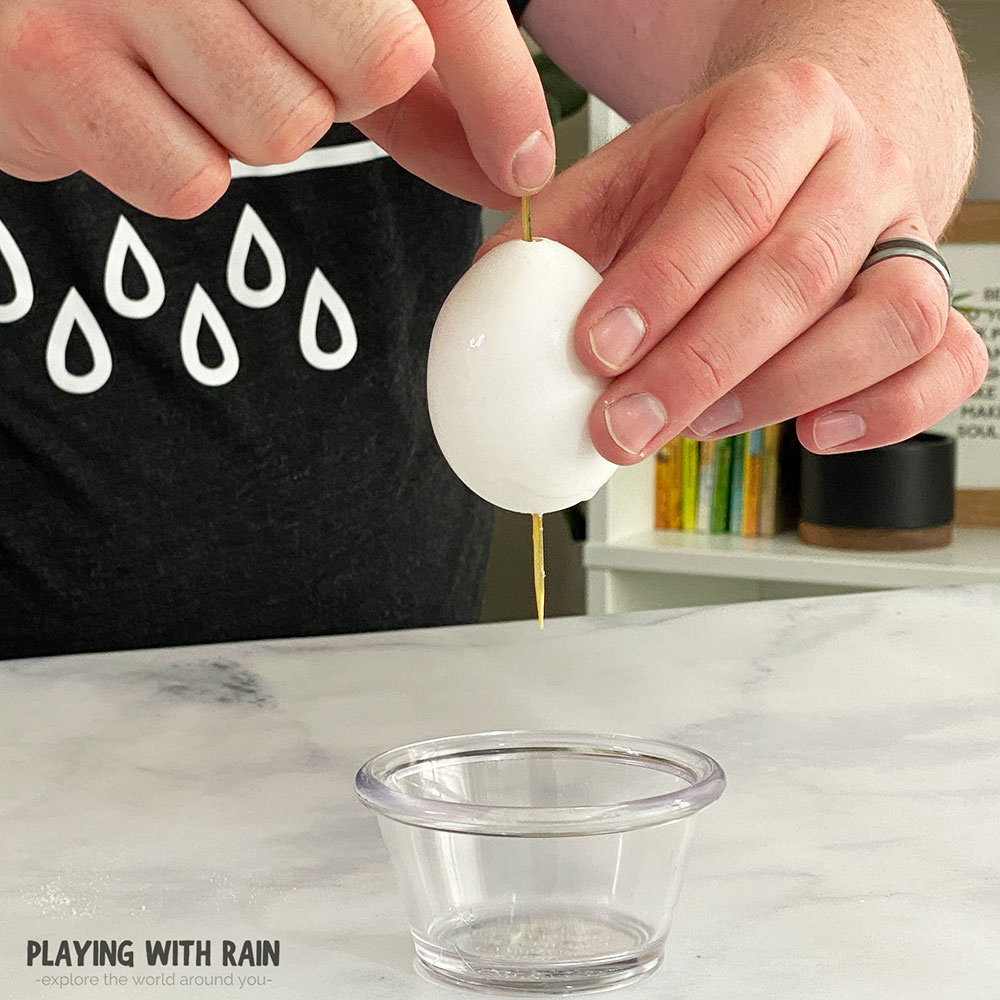
This will help the yolk and egg whites to come out of the eggshell much easier in the next step!
Step 3: Blow The Egg Yolk and White Out of The Eggshell
After you have basically scrambled the inside of the raw egg with a toothpick, its time to get the eggs out of the shell.
Keep holding the egg over a bowl or sink and then put your mouth on one of the holes in the egg.
Then blow into the eggshell to push all of the gooey raw eggs out of the other hole in the eggshell.
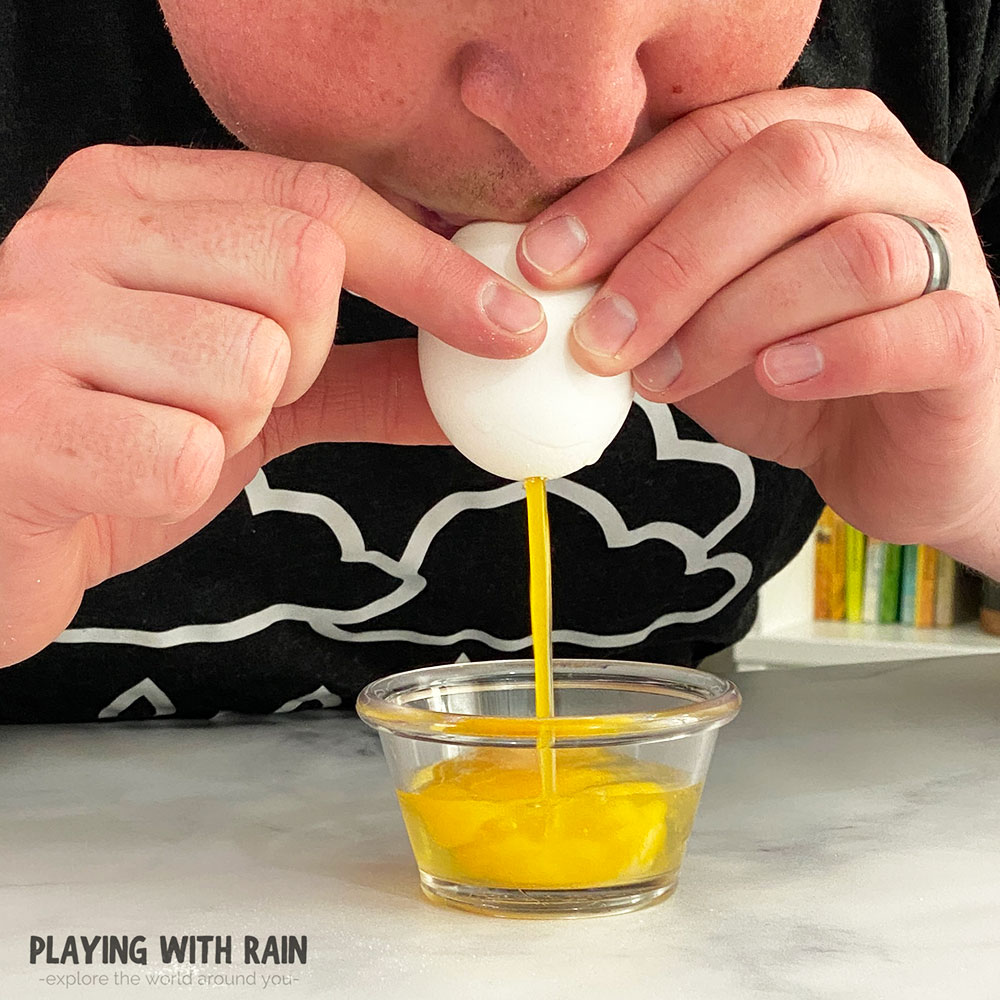
If the idea of putting your mouth on an egg grosses you out, you can also try using the air pressure of a balloon to do the work for you.
Just inflate a balloon with air, but do not tie it off. Then hold the opening of the balloon over the hole in the egg and release the air in the balloon.
The air from the balloon should force it’s way into the egg and push all the slimy egg parts out through the bottom hole.
Step 4: Place The Hollow Eggshell Into a Cup of Vinegar For Two Days
Now that you have a hollowed-out eggshell, fill a cup with vinegar and put the hollow egg in the cup.
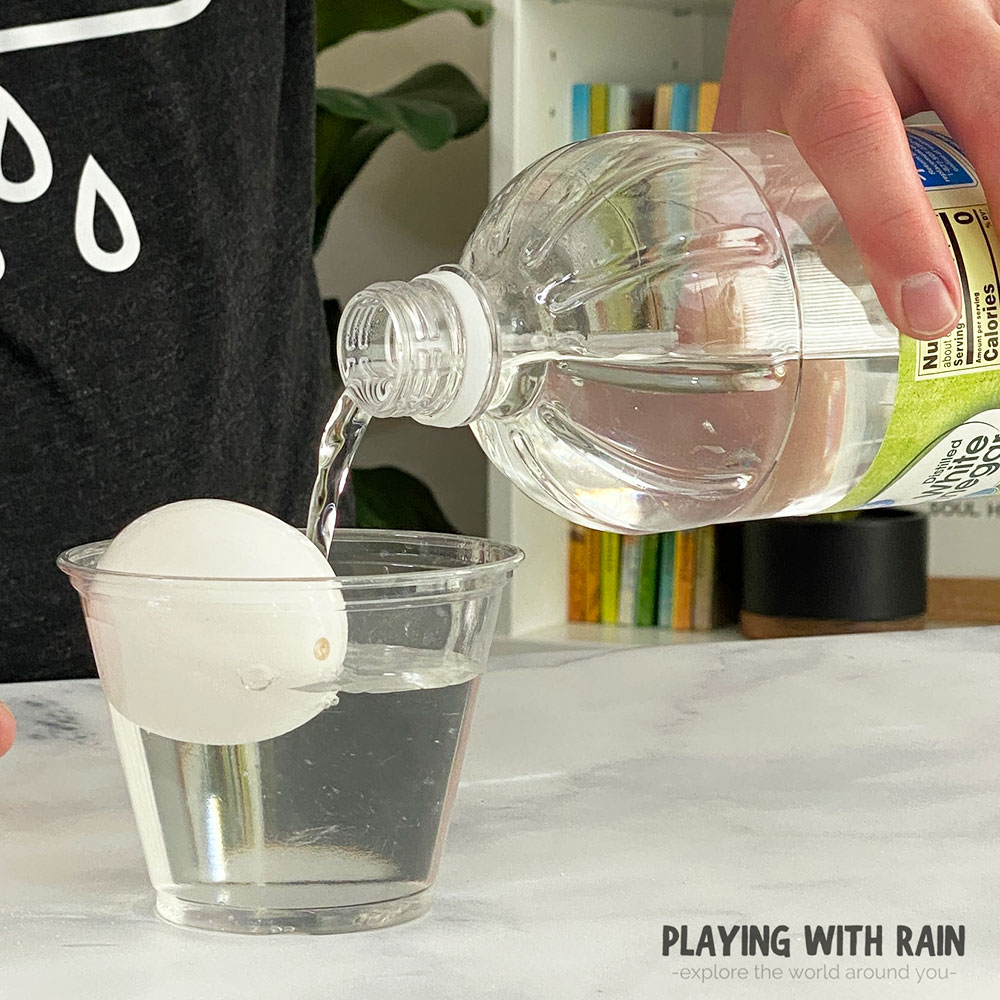
The eggshell will naturally try to float to the top of the vinegar since the shell is hollow and full of air.
But the egg needs to stay completely submerged in the vinegar for the experiment to work properly.
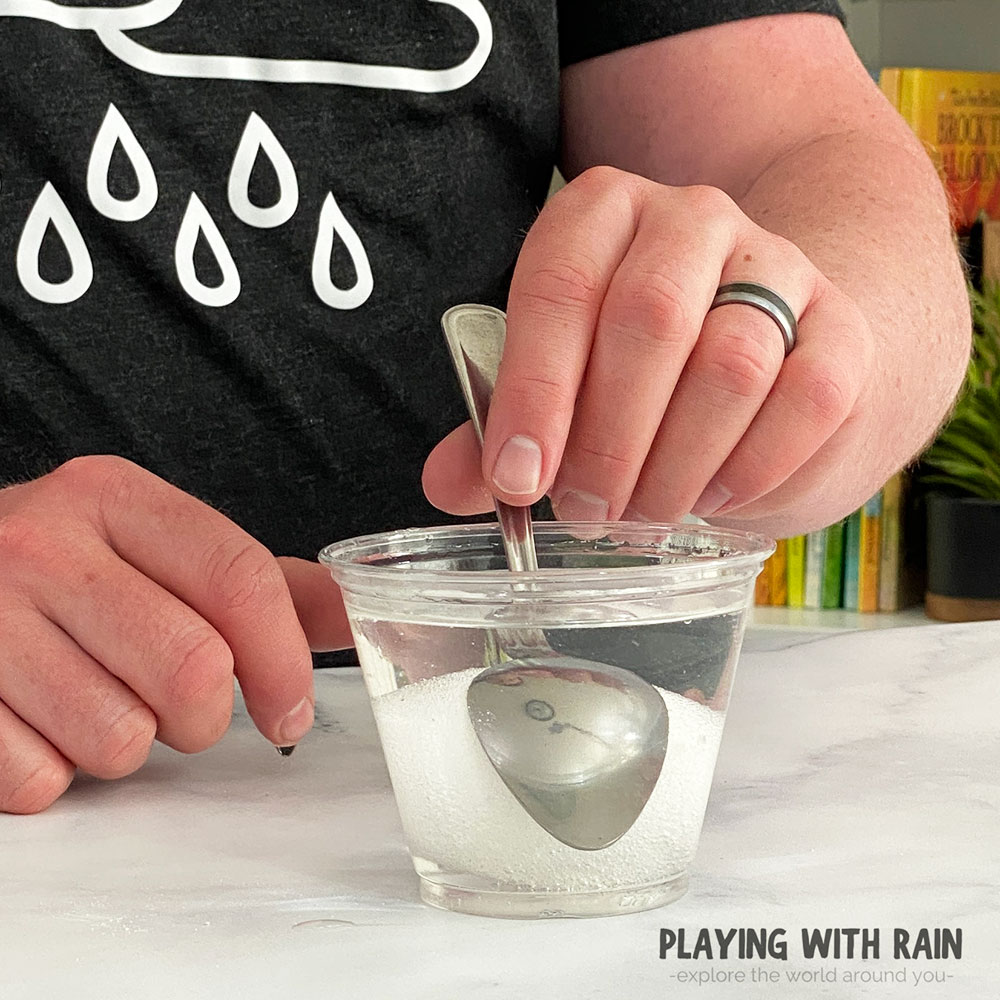
To keep the egg from floating, put a spoon or something heavy on top of the eggshell and let it sit for 48 hours.
Step 5: Remove The Eggshell From The Vinegar And Rinse With Water
After patiently waiting for the vinegar to react with the eggshell for two days, you can finally pull the eggshell out of the vinegar.
You will immediately notice the eggshell has transformed into something totally different than the hard, fragile shell that it was just two days ago!
There will be some leftover residue from the calcium carbonate of the eggshell that was dissolved into the vinegar.
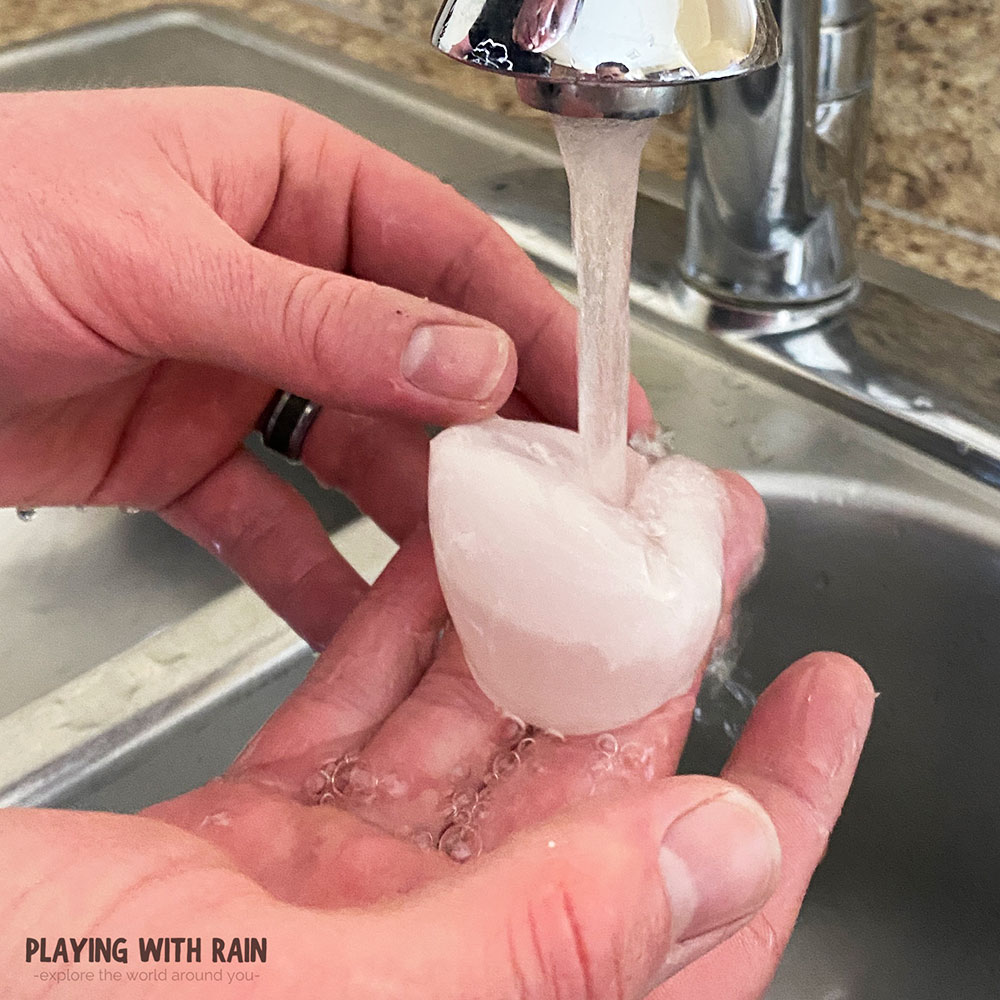
To get this residue off, gently wash the transformed eggshell by rinsing it under some water.
Step 6: Play With Your Flexible Egg
Now it is time to enjoy the fascinating transformation of your hard and fragile eggshell into a flexible, foldable eggshell!
Go ahead and toss the transformed eggshell around in your hands and feel the difference compared to a normal eggshell.
You can even try to blow a little air into one of the holes in the flexible eggshell to inflate it a little bit.
This should make it feel almost like a ping pong ball like texture and you can toss it up into the air and catch it a few times.
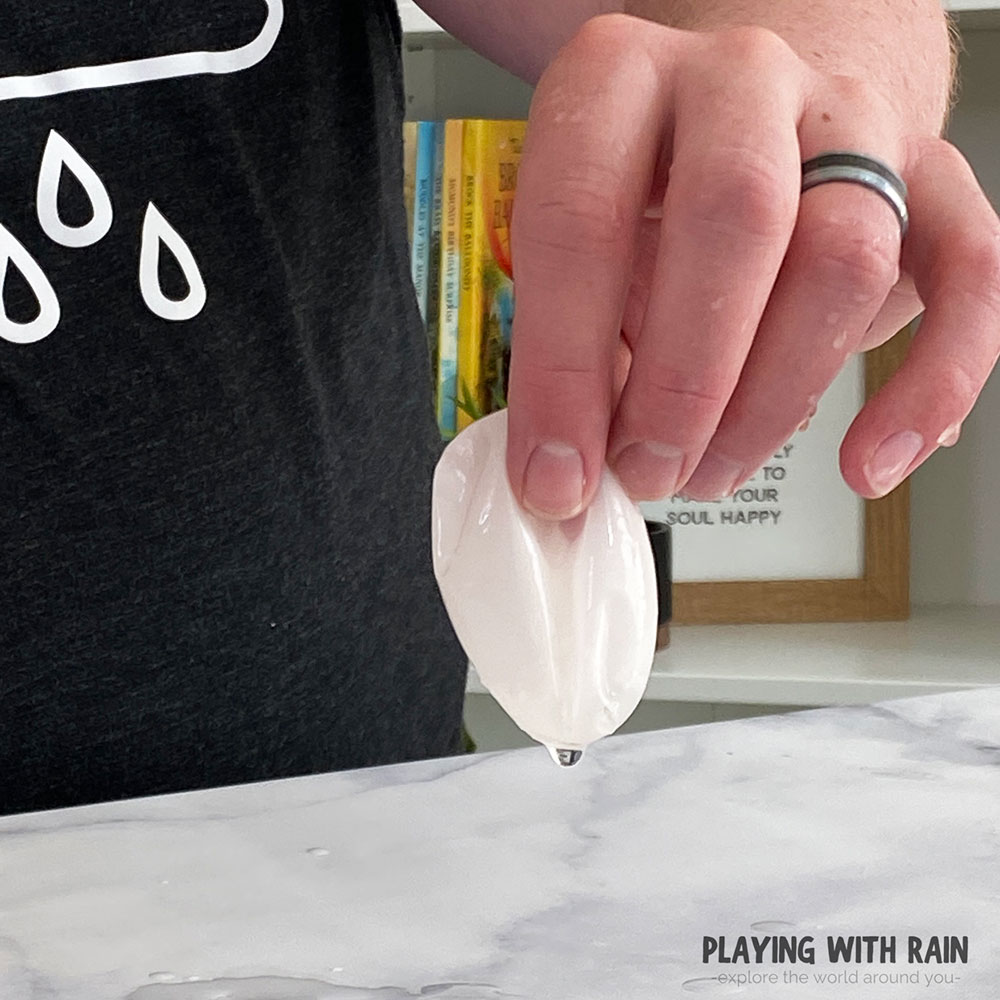
What you are actually holding in your hands is no longer the eggshell, but something called the membrane of the egg!
The hard eggshell was dissolved in the vinegar while the flexible membrane inside was left untouched by the vinegar and in the same shape as the shell!
How Do You Make Eggshells Soft?
The secret to turning eggshells soft and flexible is all thanks to the reaction between the eggshells and the vinegar.
Believe it or not, the process of transforming eggshells into flexible eggshells is very similar to the classic baking soda and vinegar reaction like in this Baking Soda and Vinegar Balloon Experiment!
Instead of the vinegar reacting with baking soda in a quick and dramatic fashion though, the vinegar reacts with the eggshells in a process that takes about two days!
What Does Vinegar do to an Eggshell?
The vinegar reacts with the calcium carbonate of the eggshell and we can watch a very slow reaction as tiny bubbles form on the eggshell.
The carbon dioxide in the eggshell is released in the reaction with the vinegar and this is what creates the little tiny bubbles all over the surface of the eggshell.
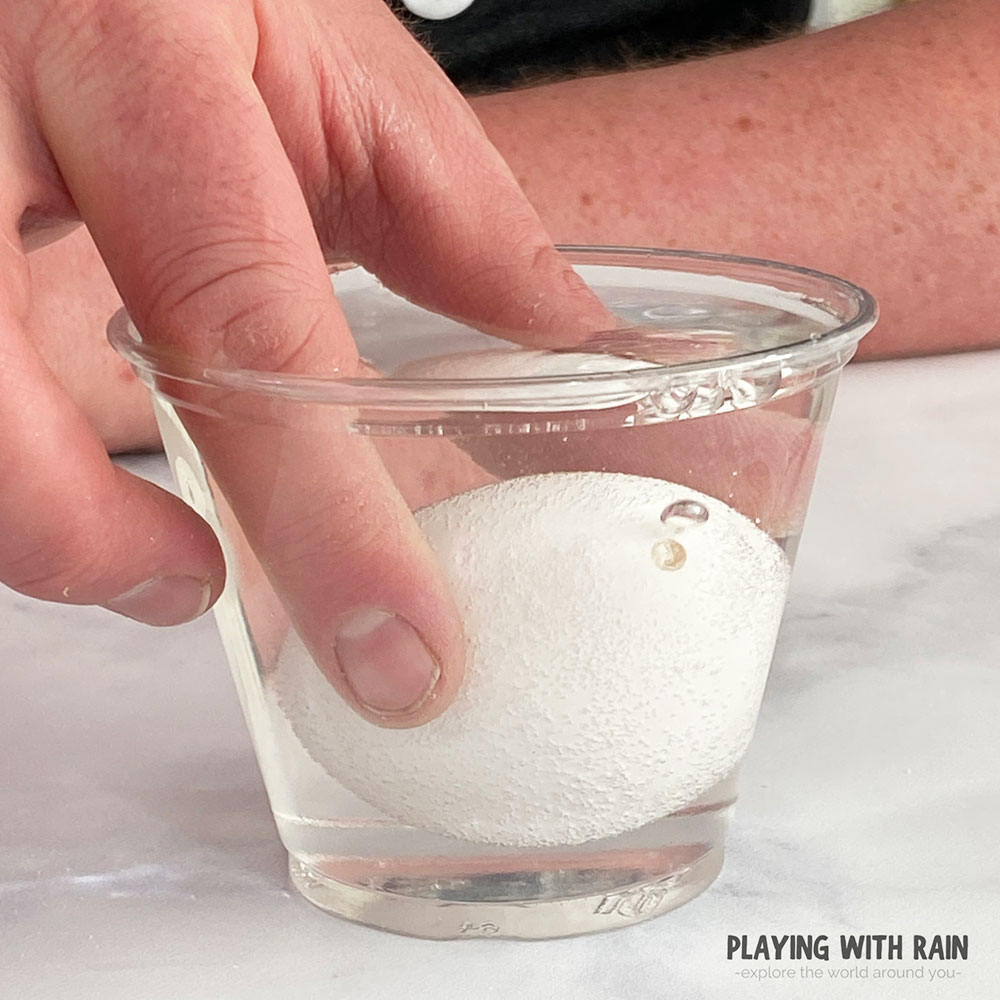
After a couple of days in the vinegar, the carbon has all been released from the eggshell and it has caused the eggshell to be weakened and dissolved into the vinegar.
If you do this with a raw egg and leave the yolk and egg whites inside, you will end up with rubber-like eggs like this Bouncy Egg Science Experiment!
But since we have already emptied out the inside of the eggshell before putting it into the vinegar this time, the only thing left of the egg now is the flexible membrane.
The membrane is what holds the egg yolk and egg whites together typically and does not get dissolved by the vinegar like the eggshell does!
PIN THIS EXPERIMENT FOR LATER

Leave a Reply